Ne te ronge pas le coeur, don’t eat your heart.
Cor ne edito.
On the bucket list: pink flamingos in the wild. Think pink with flamingos…Yes, ASAP!
Challenging conditions. Year 2022 came with quite some family-and-friends worry and loss, left with a meaningful job I liked having to be momentarily finished off fast express because of a lack of funding. January was over and the following weeks were loaded with insecurity and disappointment. The project was stuck, the team was drifting apart, energy was getting low. “The career of flowers differs from ours only in inaudibleness. I feel more reverence as I grow for these mute creatures whose suspense or transport may surpass our own.” – Emily Dickinson (April 1873 letter). Such words could have fitted some fleeting moments then.
As for many, many others, the uncertainty of health, wealth, support and respect had to be compensated with inner grounding and choosing to be one’s own vessel for happiness.
Easier said than done.





So I started checking reasonable possibilities to see flamingos. South of France was on strike, Portugal was a bit too expensive. Flamingos in Malta… Malta? Stray ones sometimes land there, lost on their migration routes.
To surprise myself, I did take an unusual flight for my low carbon emission desperation standards and left for the affordable flamingo place then, Malta. The week before I had never ever considered visiting the island.
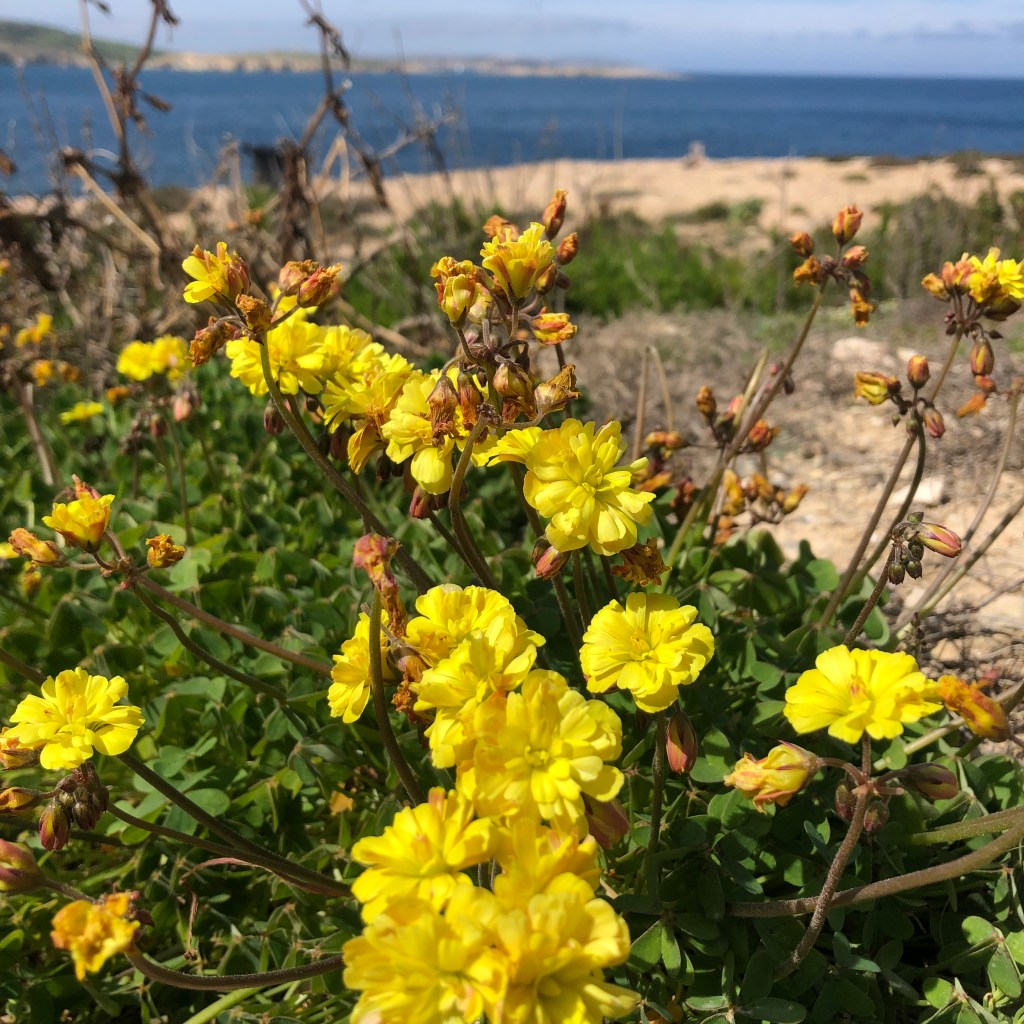
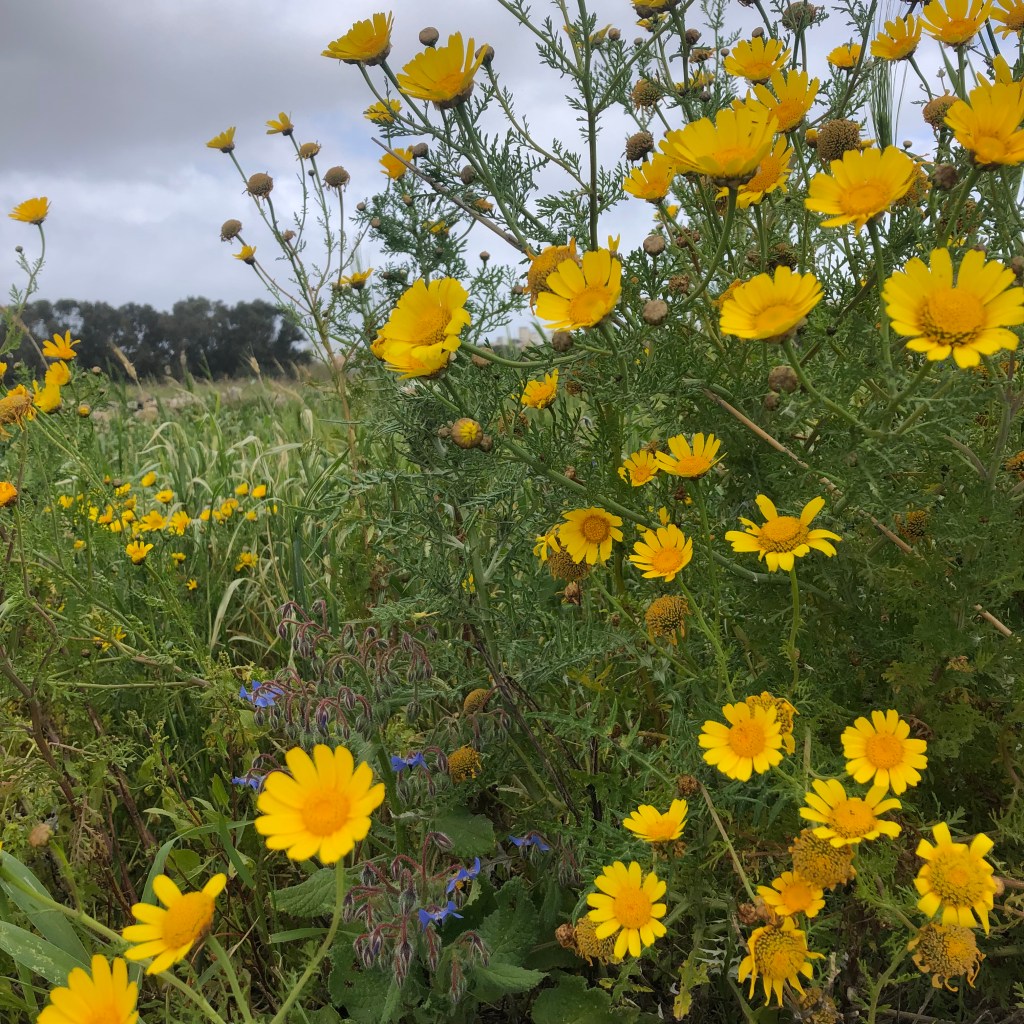
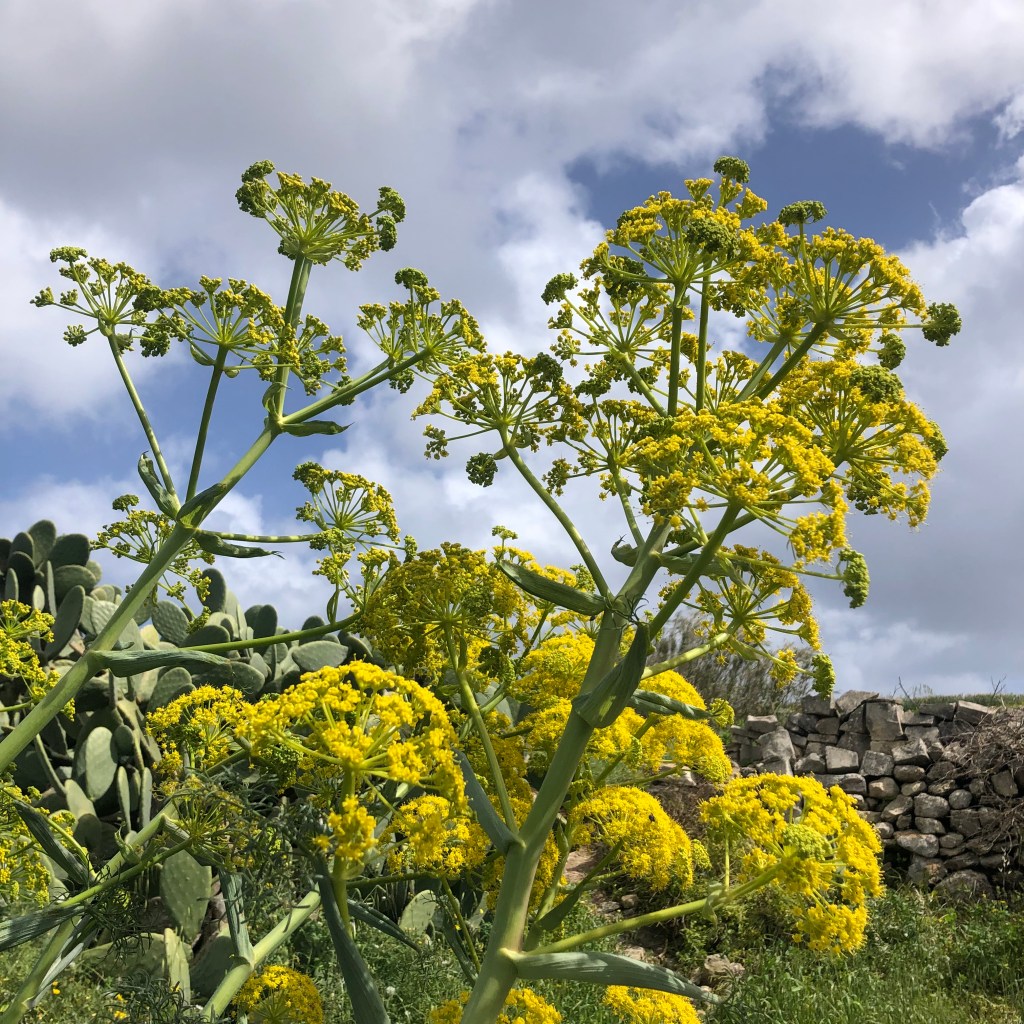
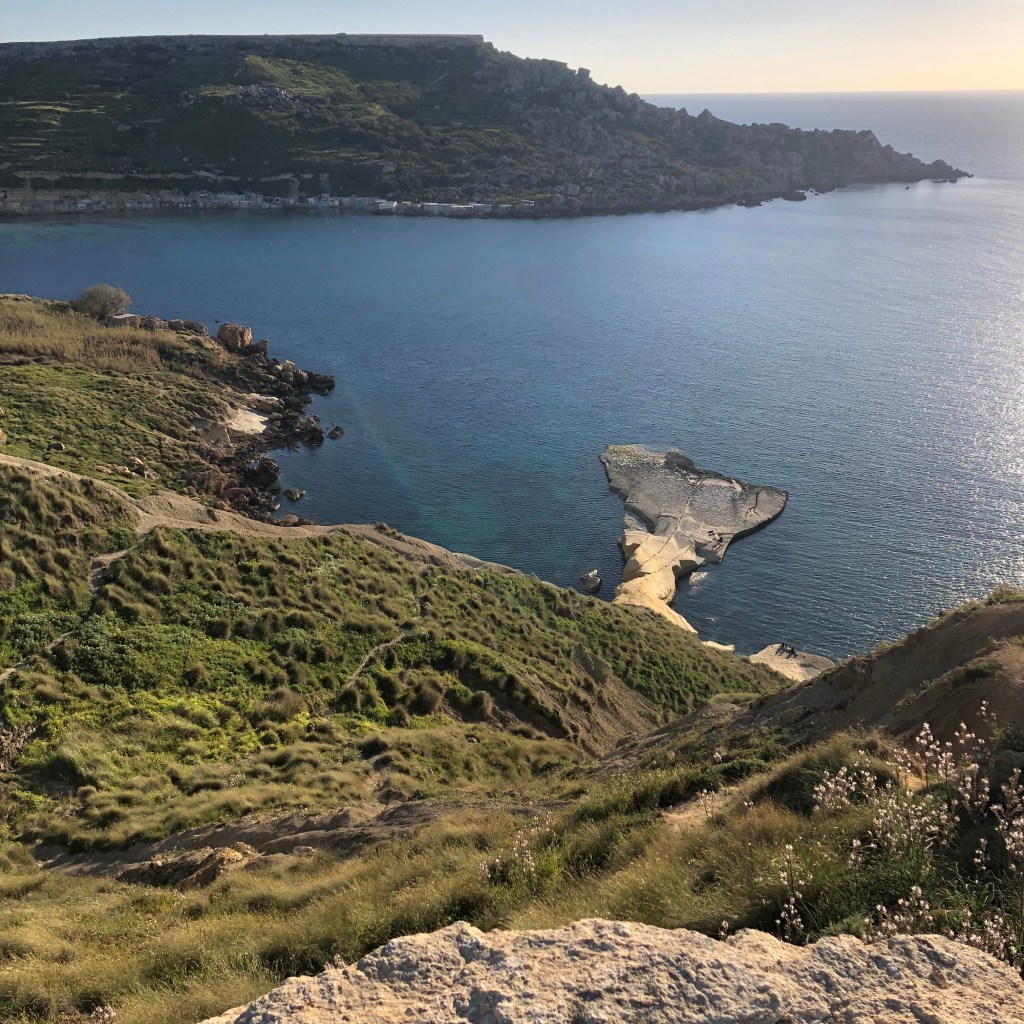
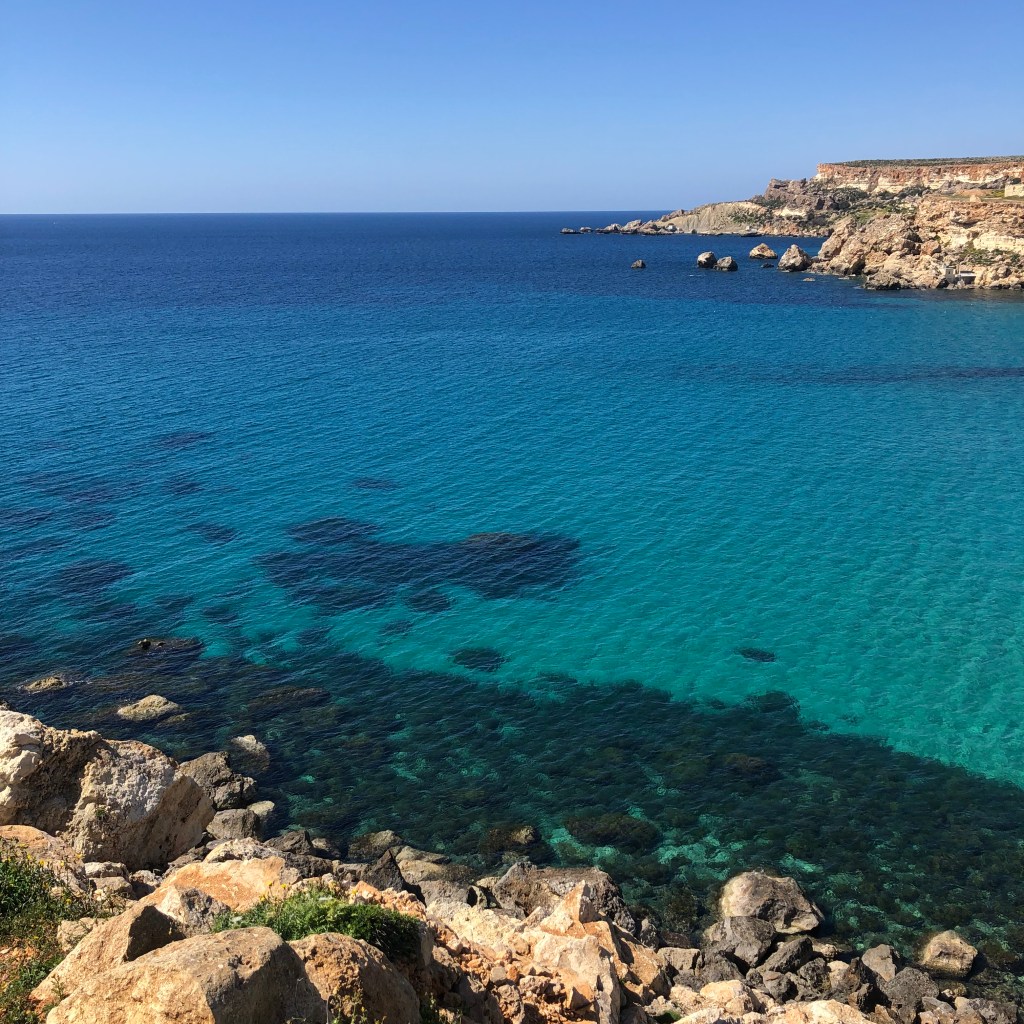
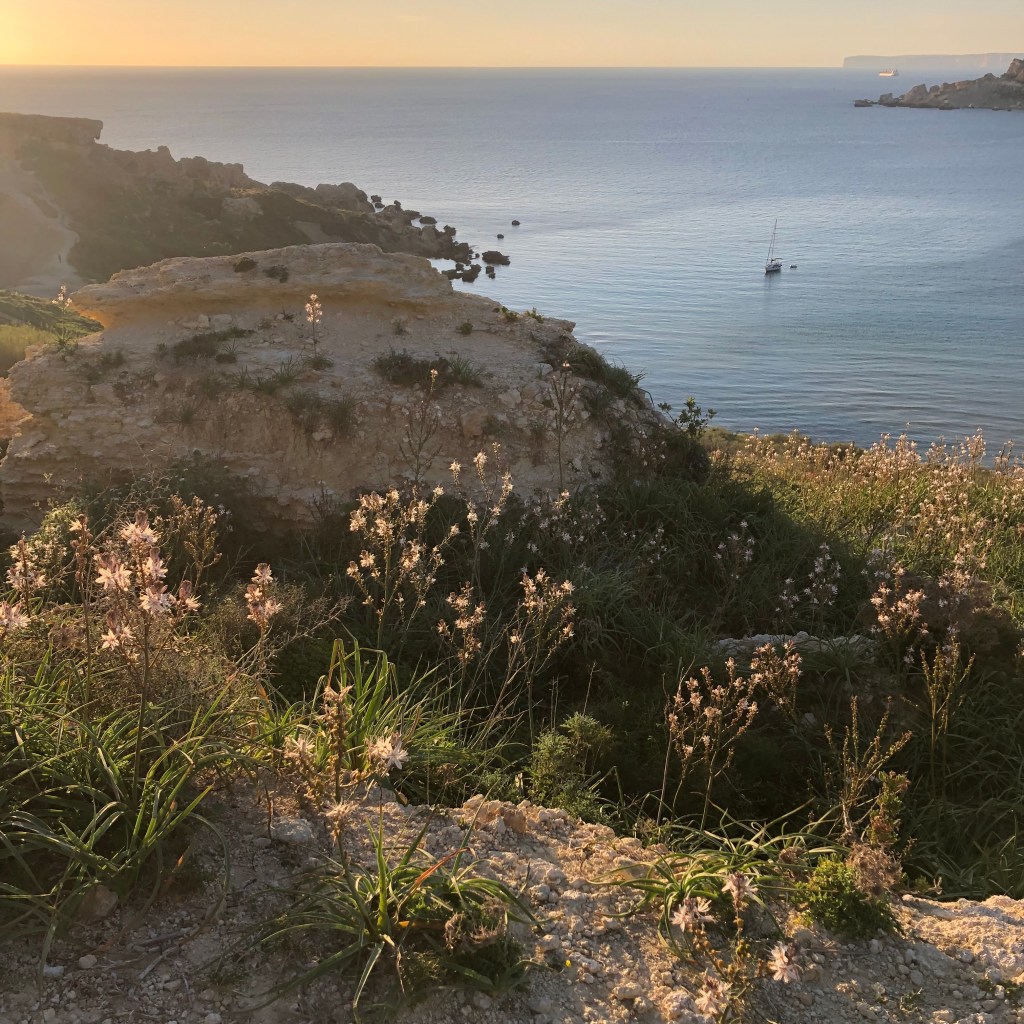
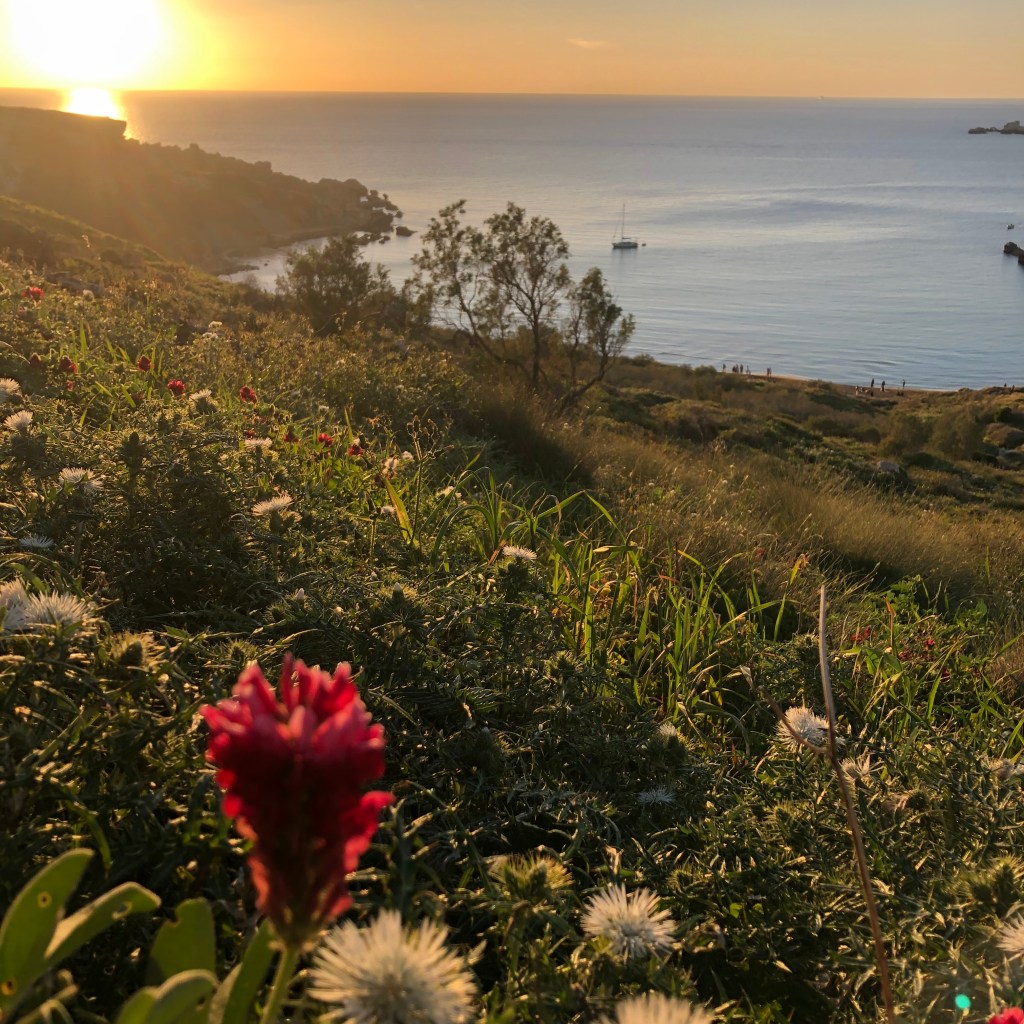
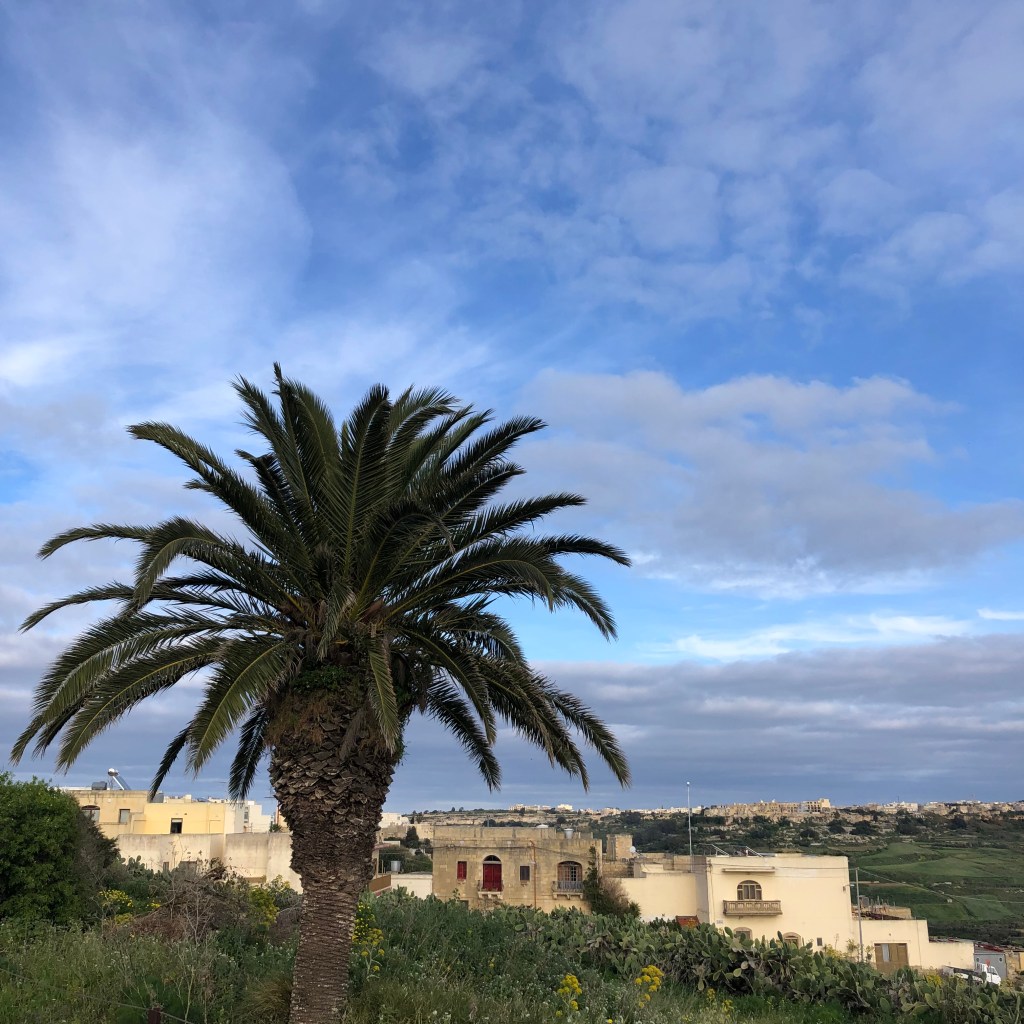
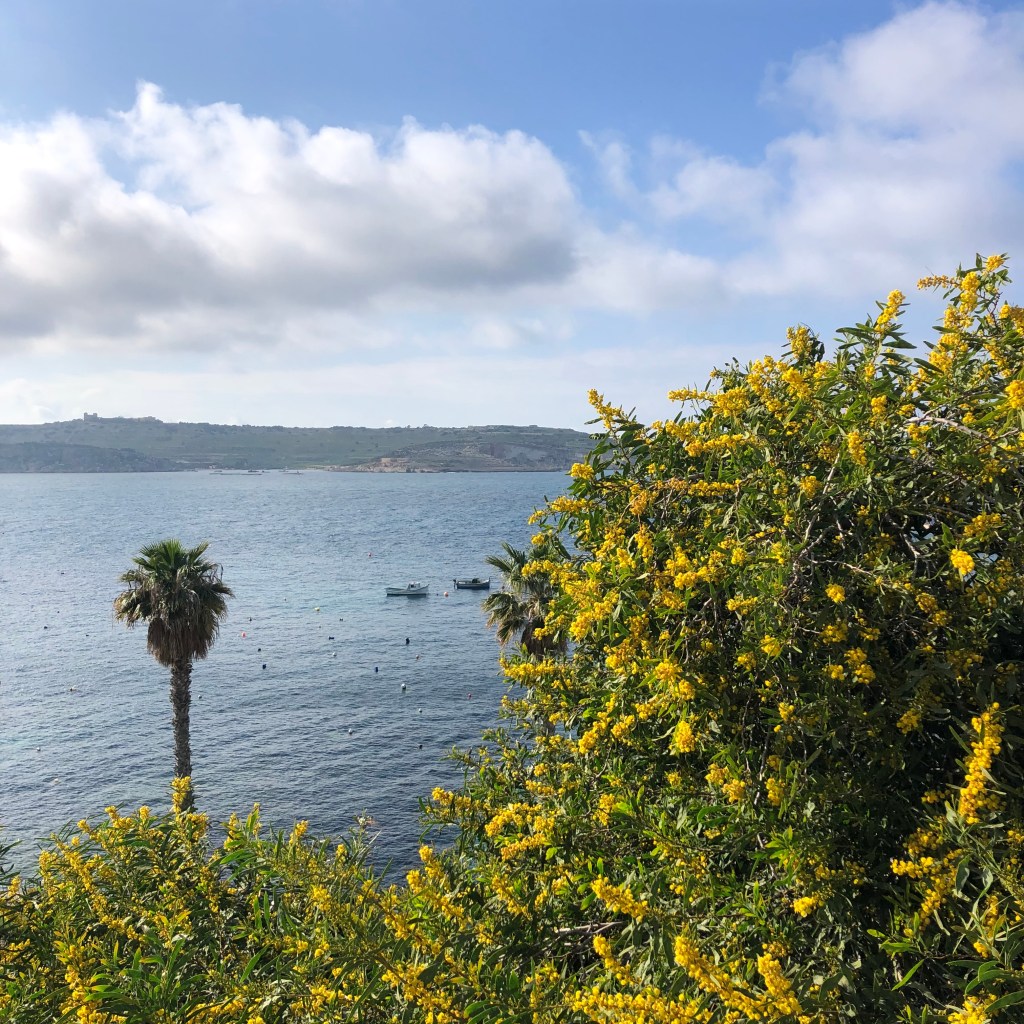
Looking for a different perspective, I found Spring with a bunch of interesting old stones, a coast of flowers, quite a few lovely beaches and a grateful smile in the mirror.
I walked for miles and miles and miles.


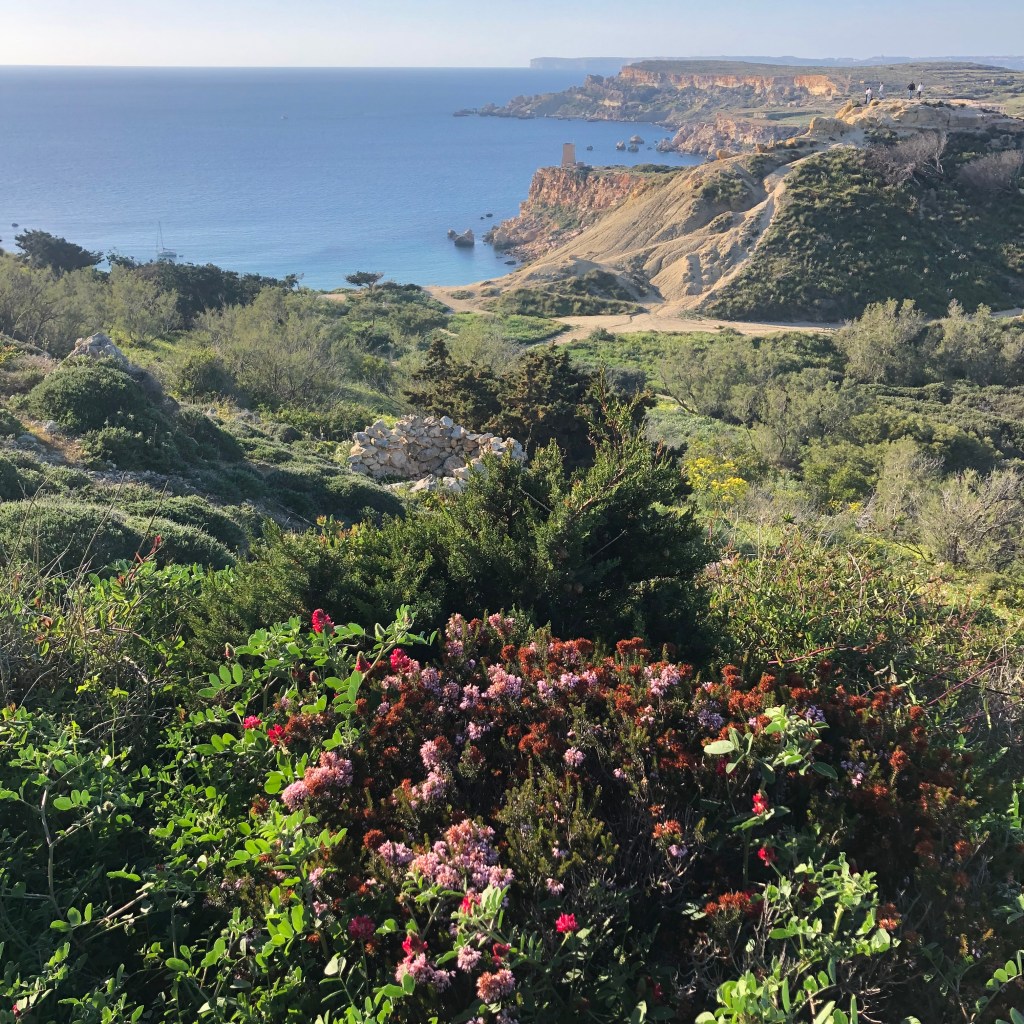
Not sure where to start my flamingo search, I visited the Bird Park Malta. For sure, there would be pink flamingos to be found in it.
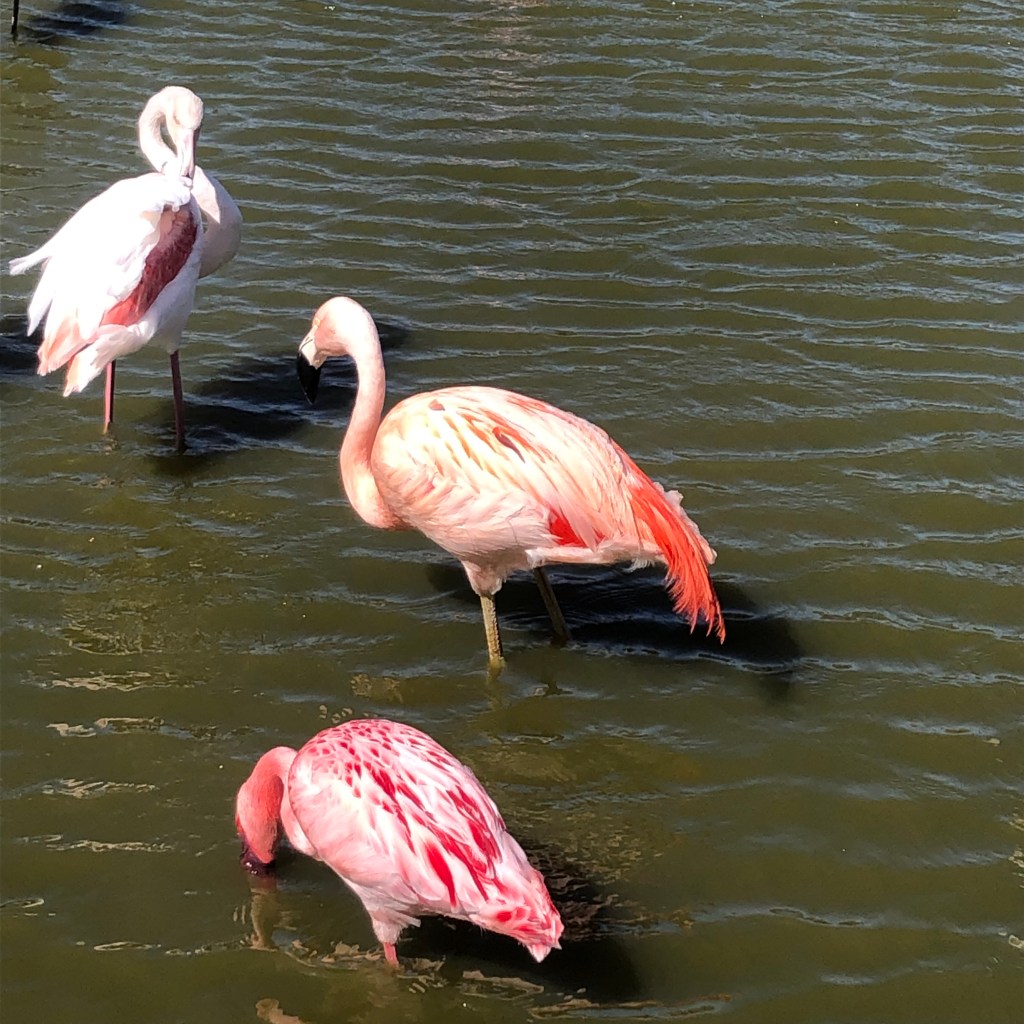


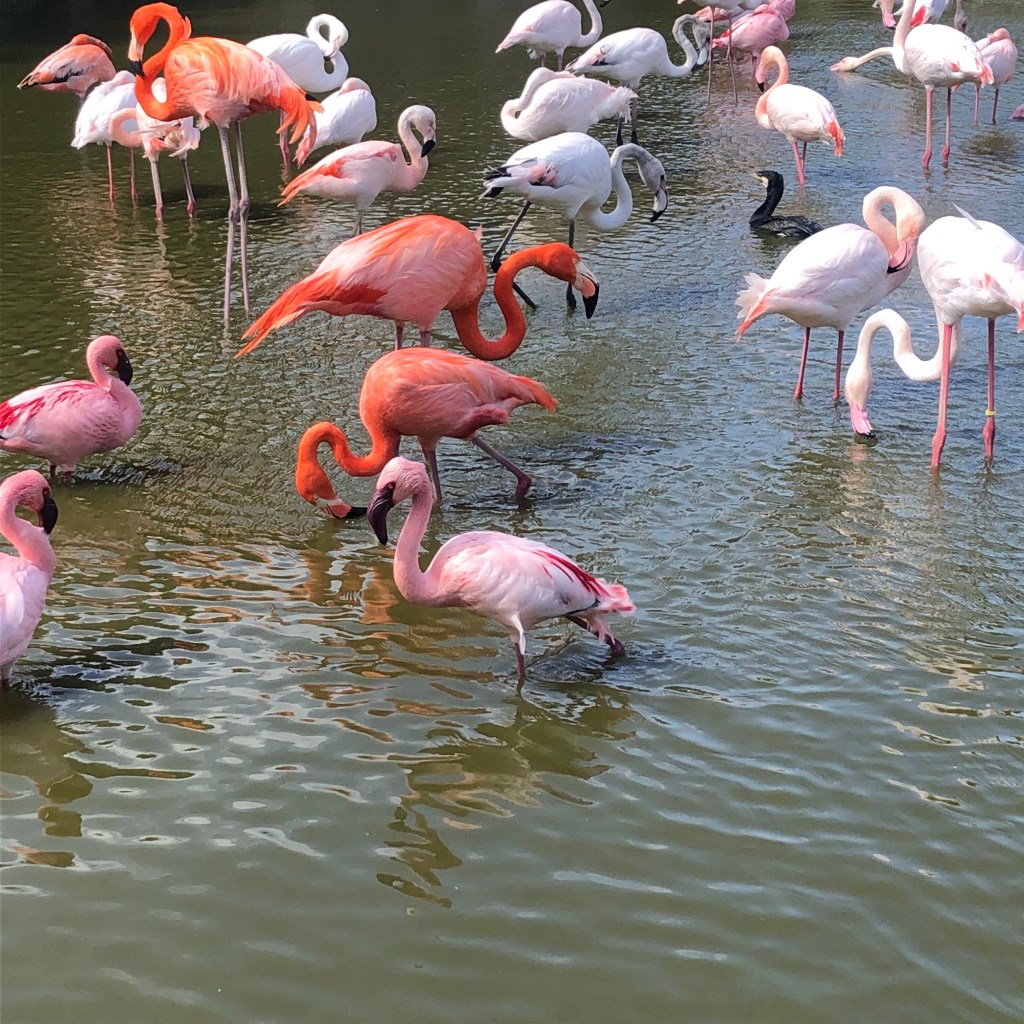
But… « I said: pink flamingos in THE WILD. »


There wasn’t a lost flamingo to be seen in the salty waters of Salina but a friendly face in the saltpans told me that there was a flamingo sight on the island, at Ghadira.
On a cloudy day, I arrived in front of a closed entrance. Of all days, it was the day the main entrance was being fixed. Nature reserve was closed all day, for repairs. The advice received then was to go at the back of the managed saltmarsh and brackish lake, climb on a small hill and try to spot the flamingo. Not pink at all, more like grey white, and probably hidden under a tree.
During a sunny spell, the reserve opened up on the horizon. The flamingo was there, eating in the shiny shallow water as I contemplated it, savouring the modest and beautiful present. A few drops fell on our heads. A group of herons flew up, up and out of sight. So many together, amazing.
saltpans


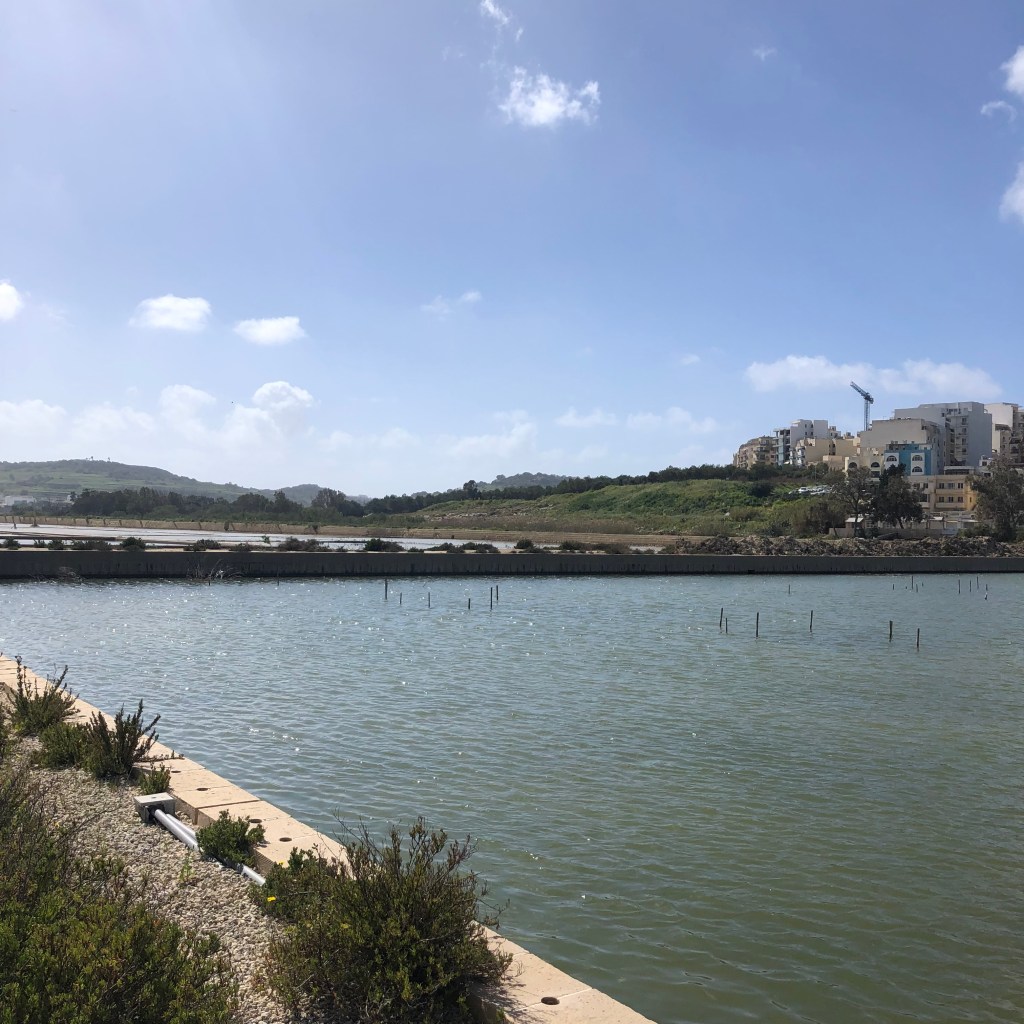

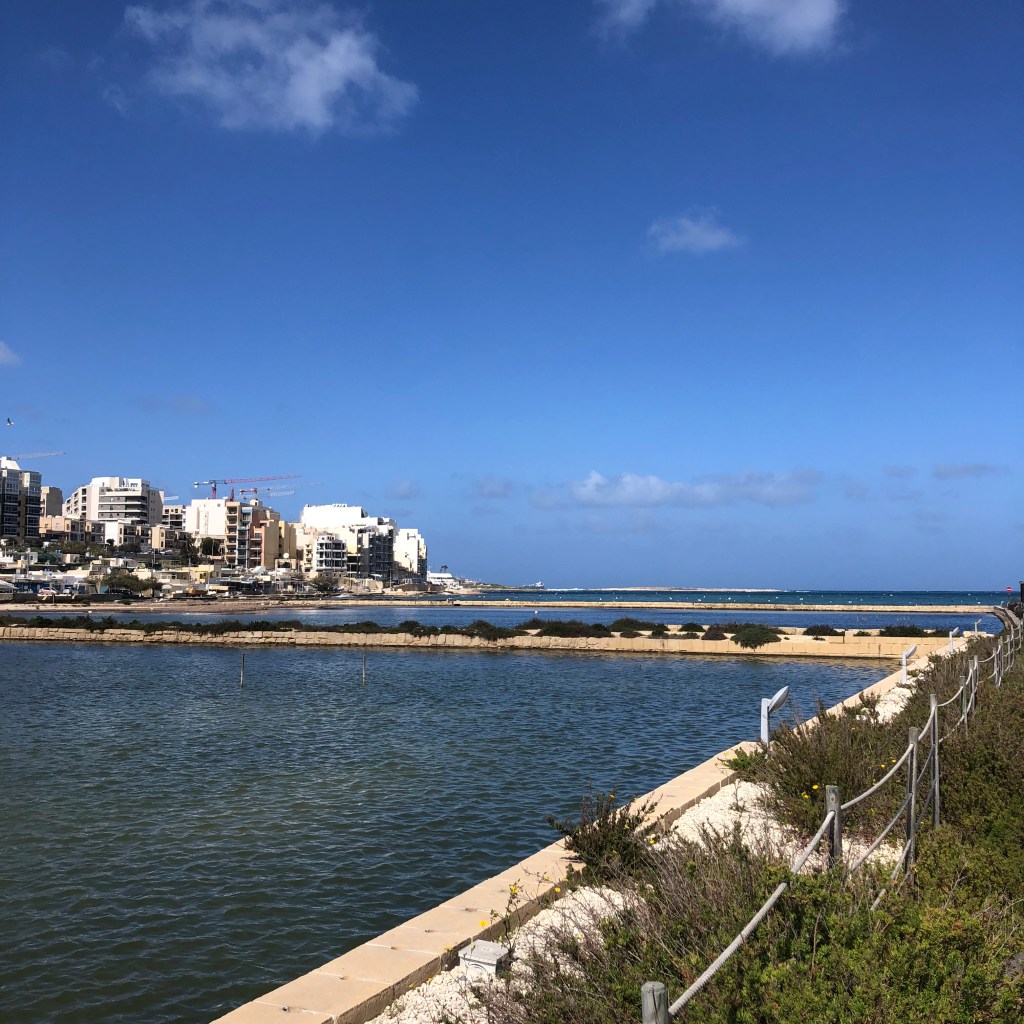


Saltpans are used to collect salt from seawater. They can be dug out of the rock. Seawater is left to gradually dry out, from deeper colder pans close to the sea to shallower warmer ones nearer the inland, leaving a white residue that will then be collected and cleaned.
The man-made ones above are the Salina Saltpans and were built by the Knights of Malta.
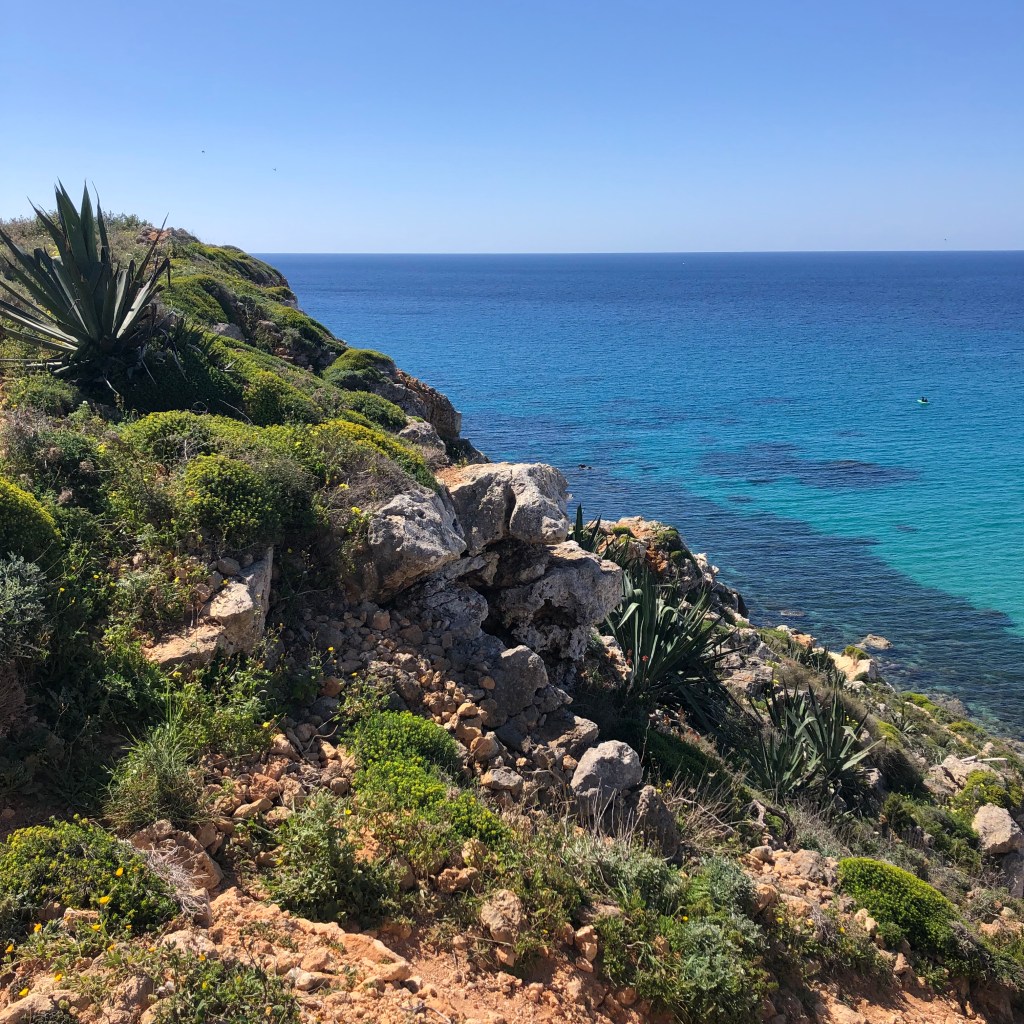

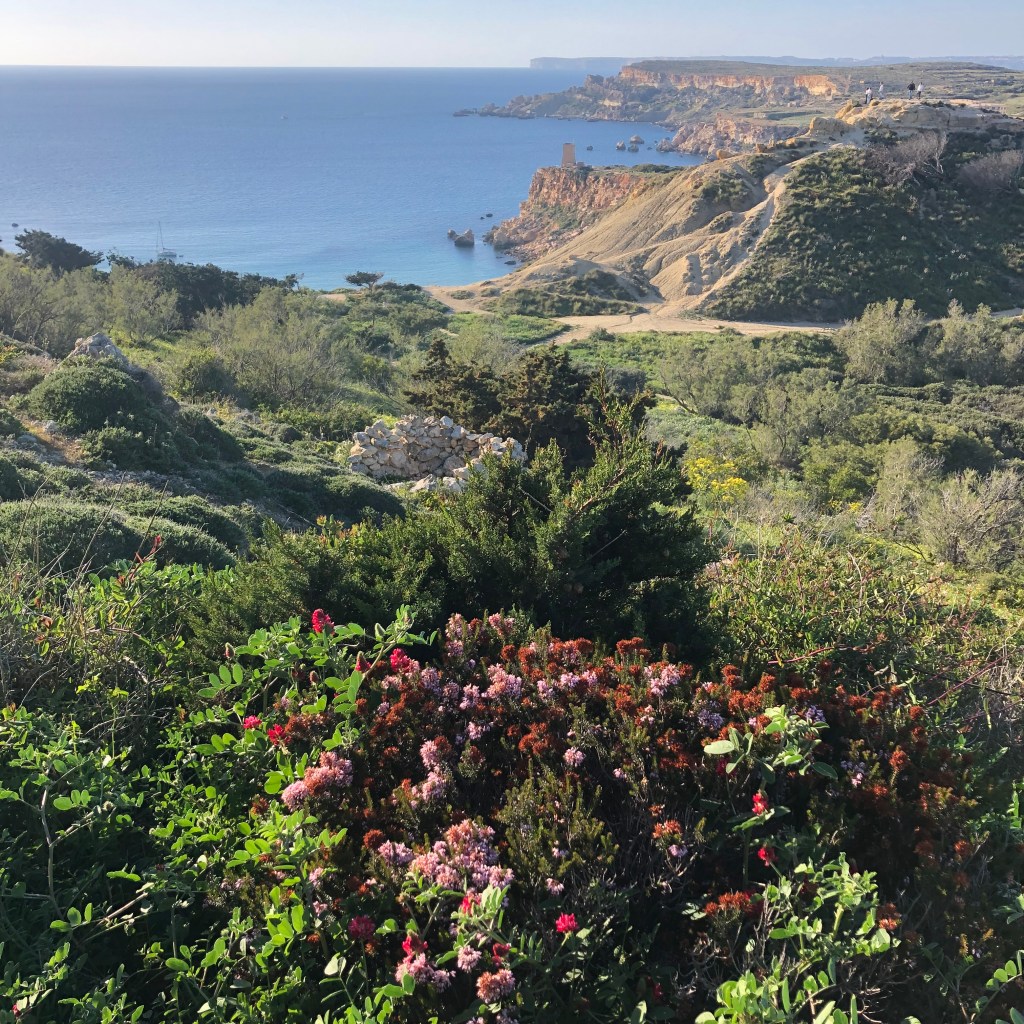
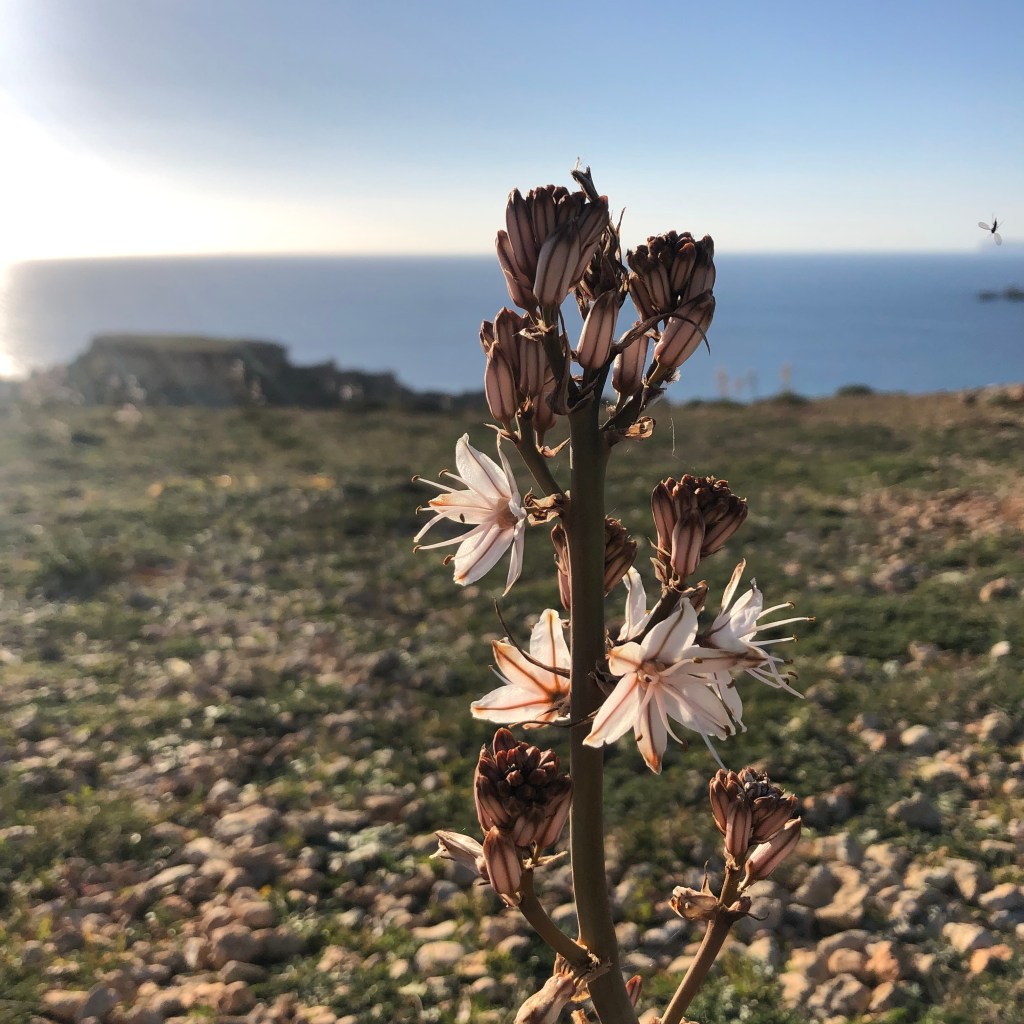




Heavy old stones became very reassuring then. Human beings lived and loved and died hundreds and hundreds and hundreds of years before my tired steps. There was some comfort to be found in what they had left as a legacy.
The archipelago has cart ruts, Neolithic and Punic tombs, troglodyte caves, menhirs, Roman apiaries and baths, trefoil patterned temples. The list could go on, mentioning that Malta has the high church density of a bit more than 1 church per square kilometer.
It became blatantly obvious that it has been a spiritual place for ages and that in my search for inner grounding I wasn’t fully aware of a basic need for outer grounding. Apart from seeing a flamingo in the wild, I was also looking for traces of deep humanity and connection. Something stable, solid, authentic, that I could feel through my senses and that was able to support my weight.
It reminded me of words of my taijiwuxigong teacher, when talking about the energy of the earth, giving us life and support, how busy our heads and thoughts can be as we lose touch with our body and the ground, as we lose our heads instead of loosening up.
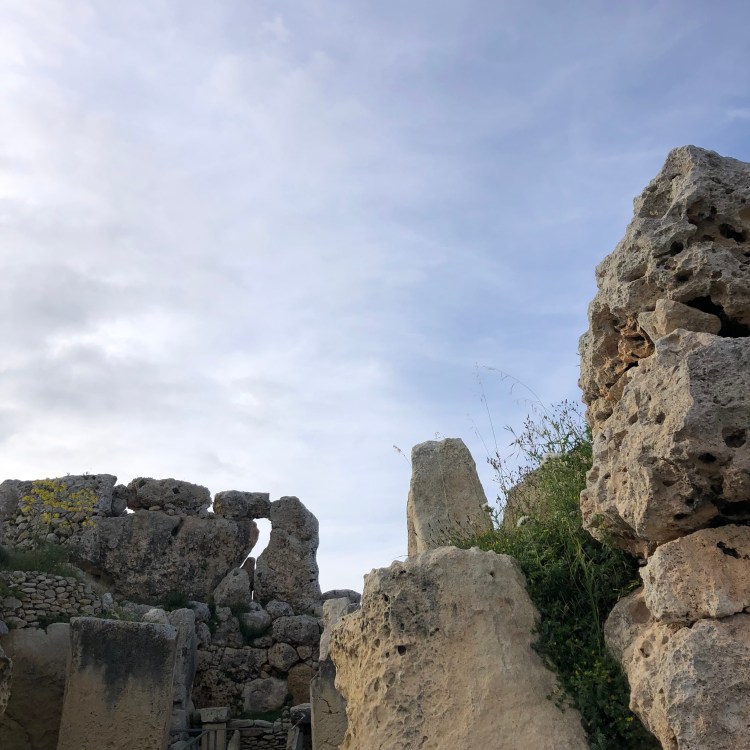
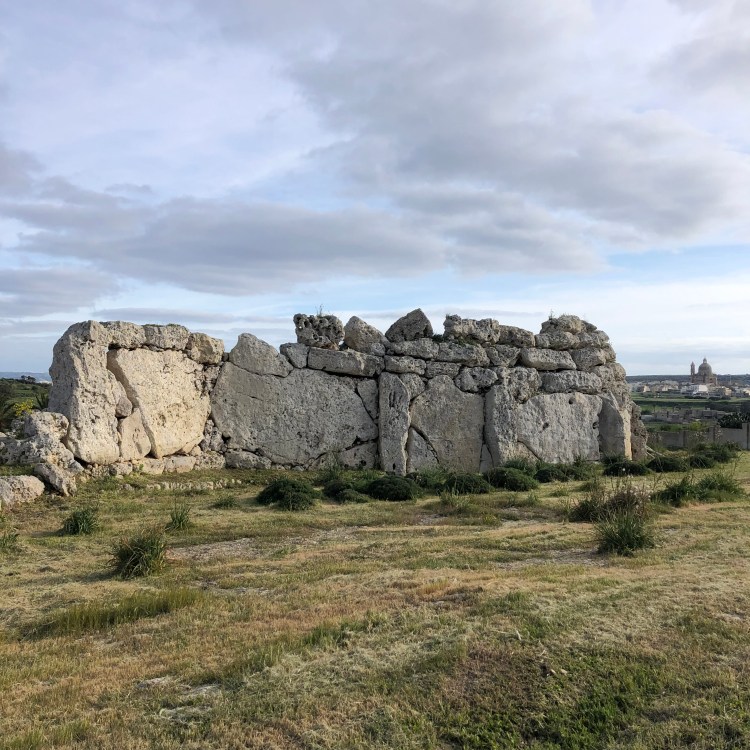
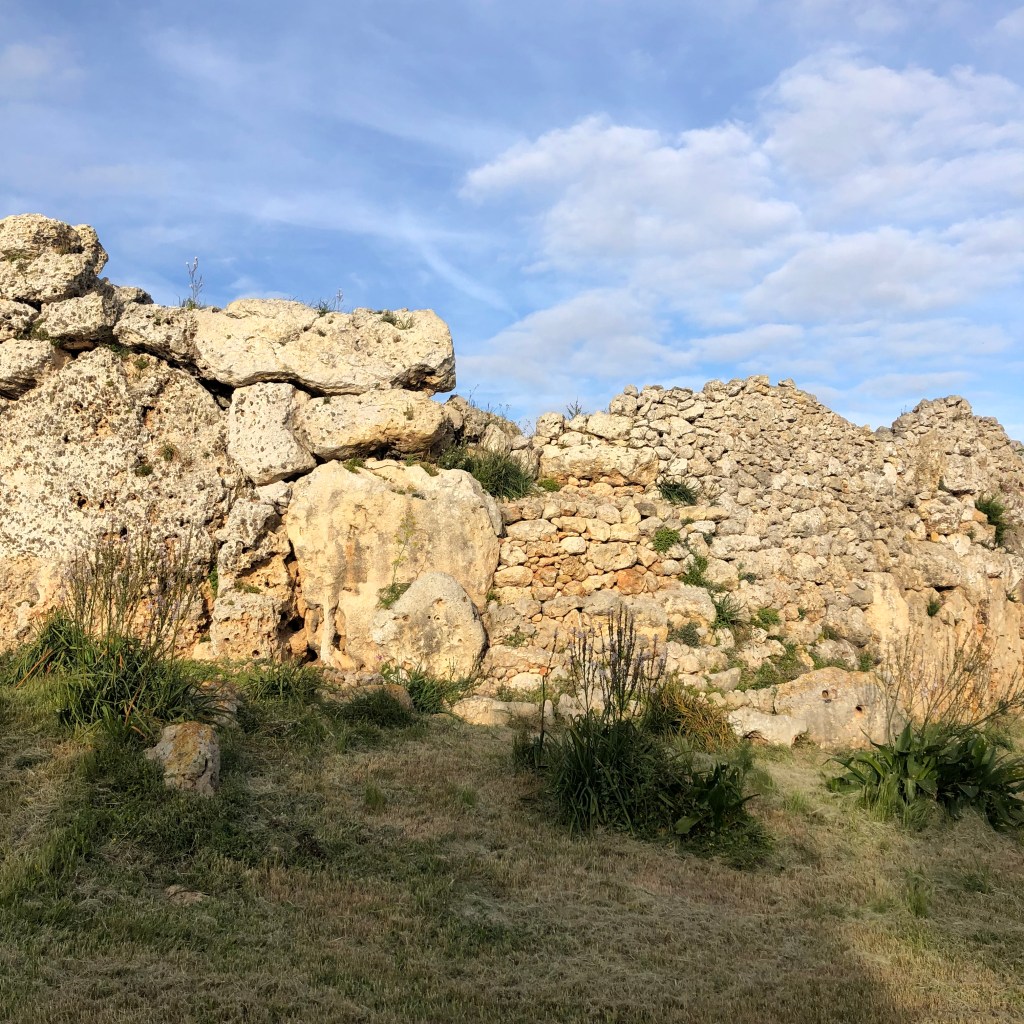
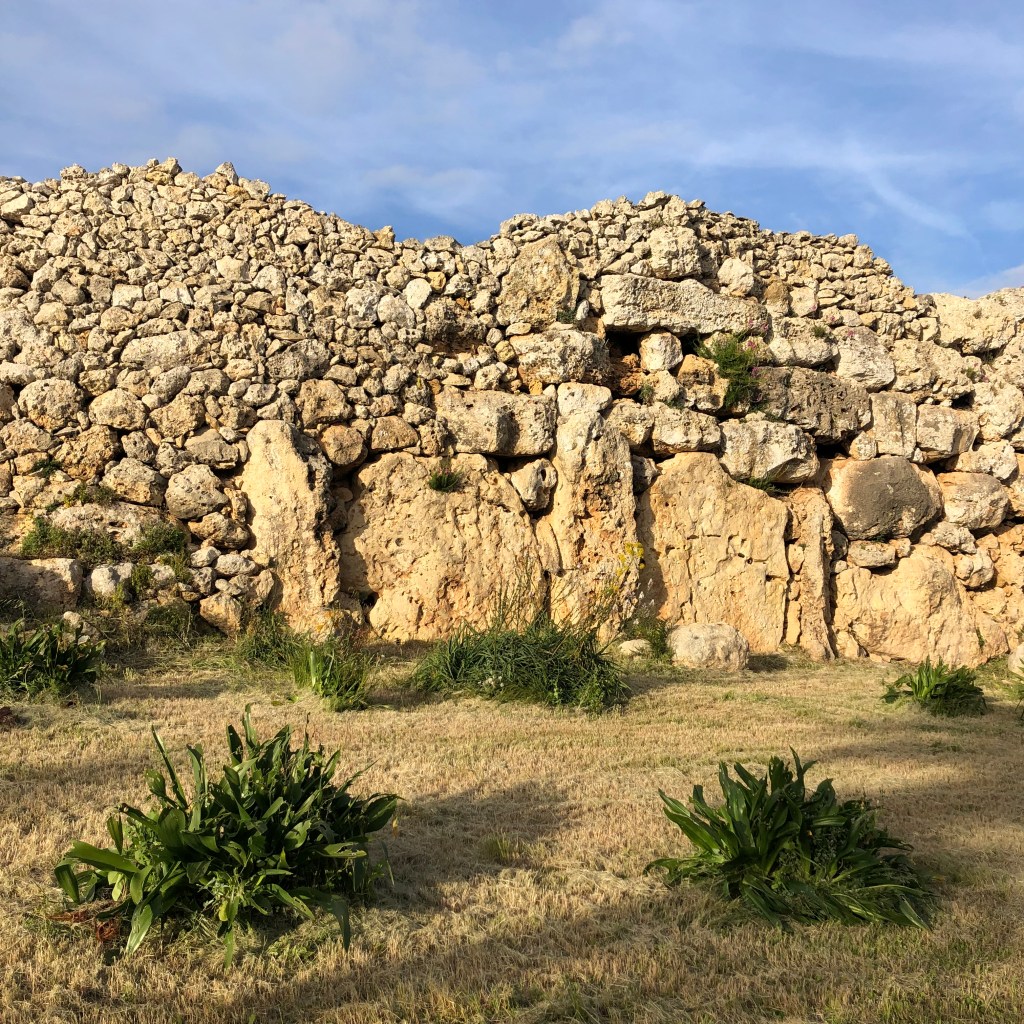
The gentle roundness of the trefoil patterned temple of Ggantija, sometimes attributed to the feminine aspect of our human research for and worship of the divine, grounded me in a way few places have done before. Seeing it was one of the clear moments when old stones came to be alive for me.
Ġgantija (Gozo)







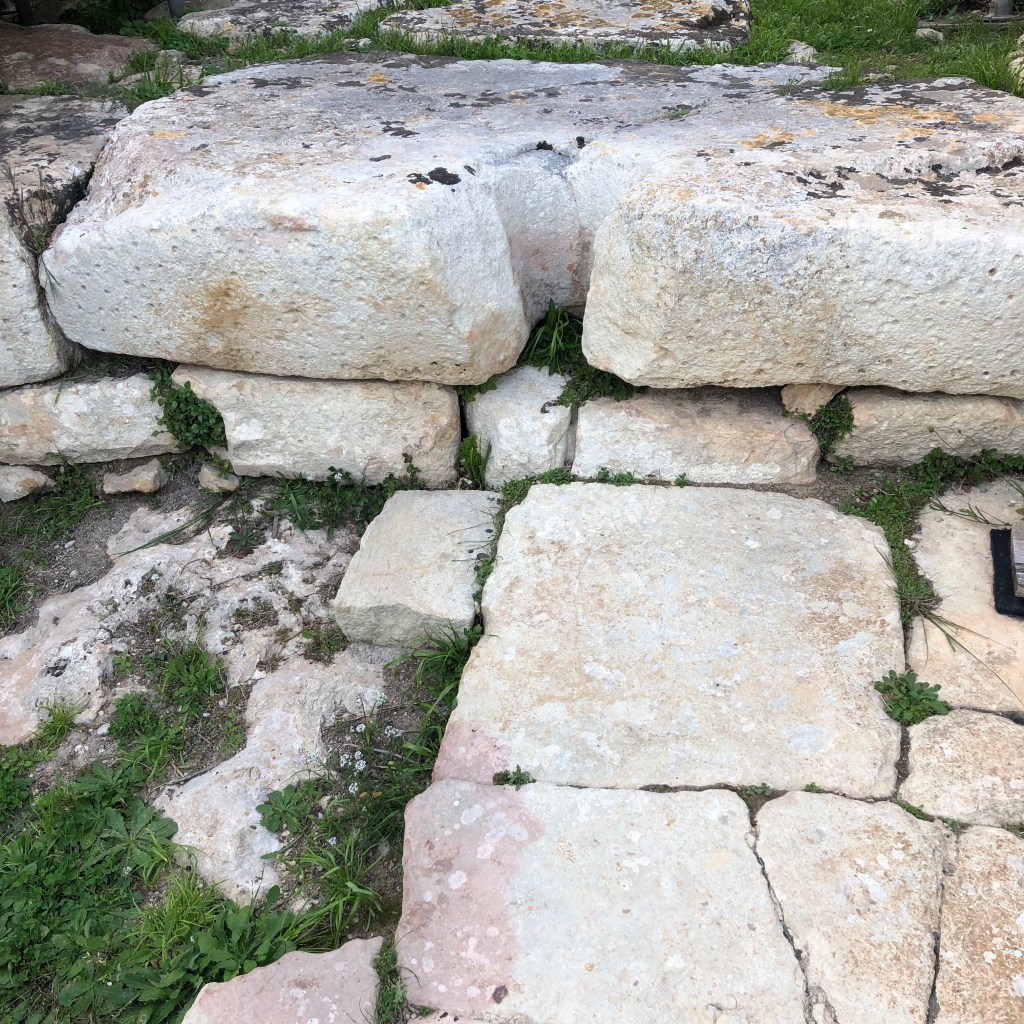



Xemxija (Malta)
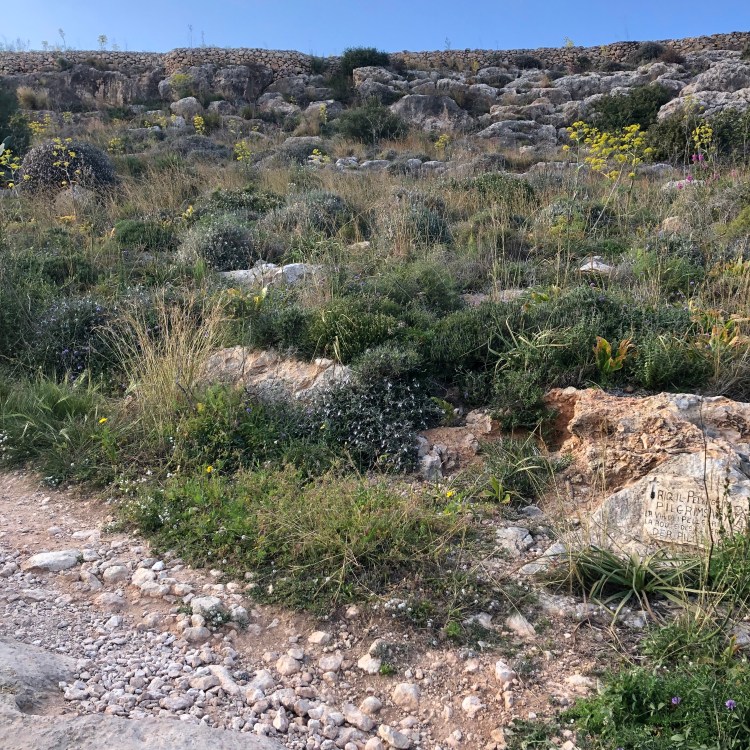
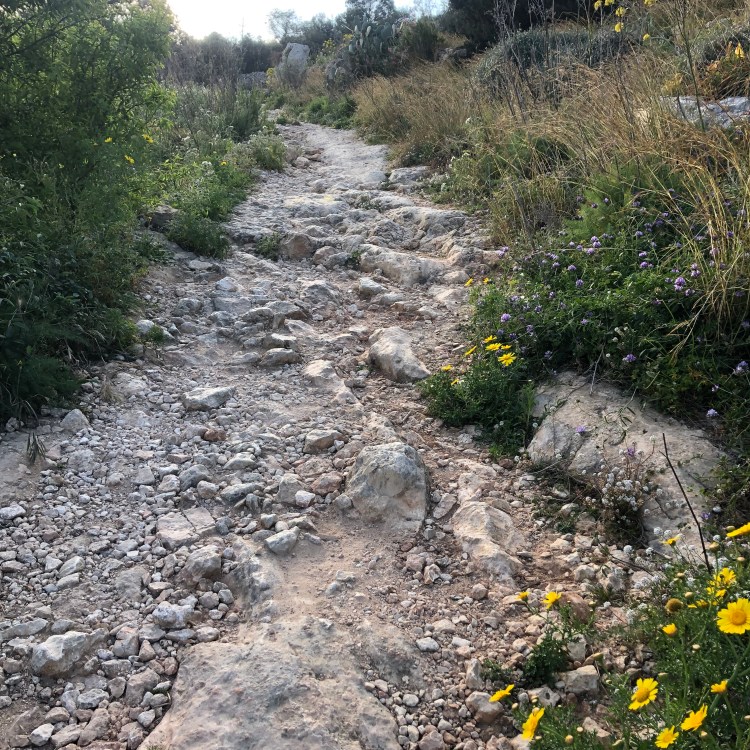
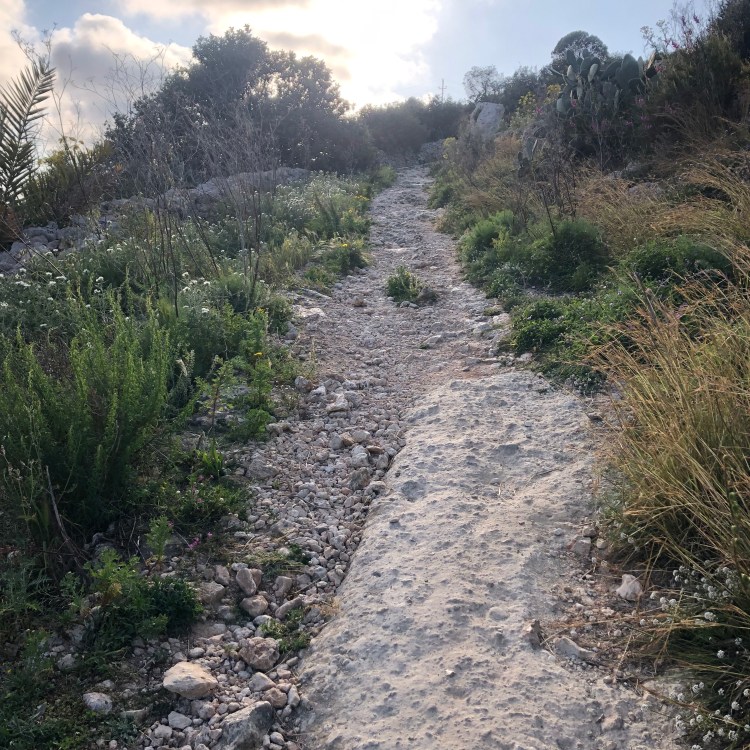
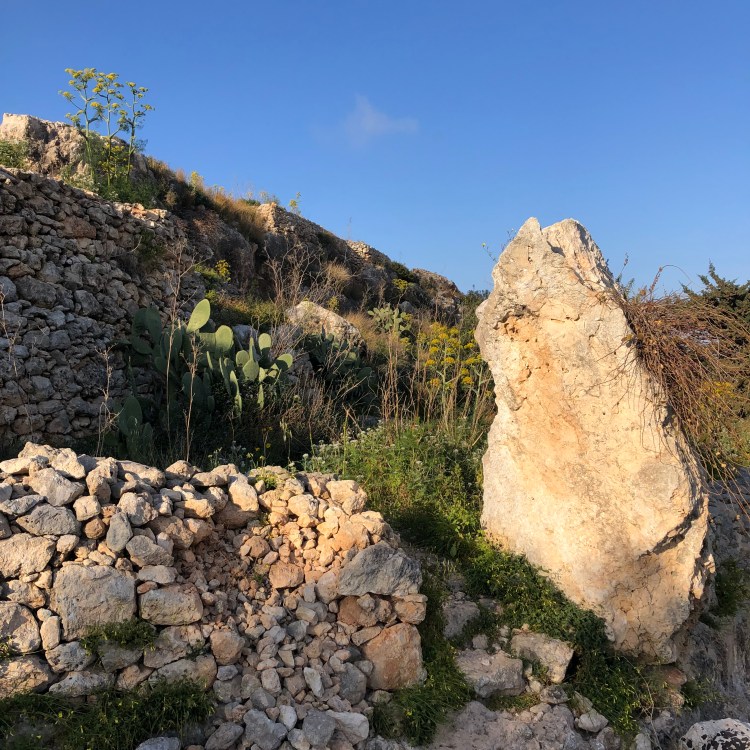

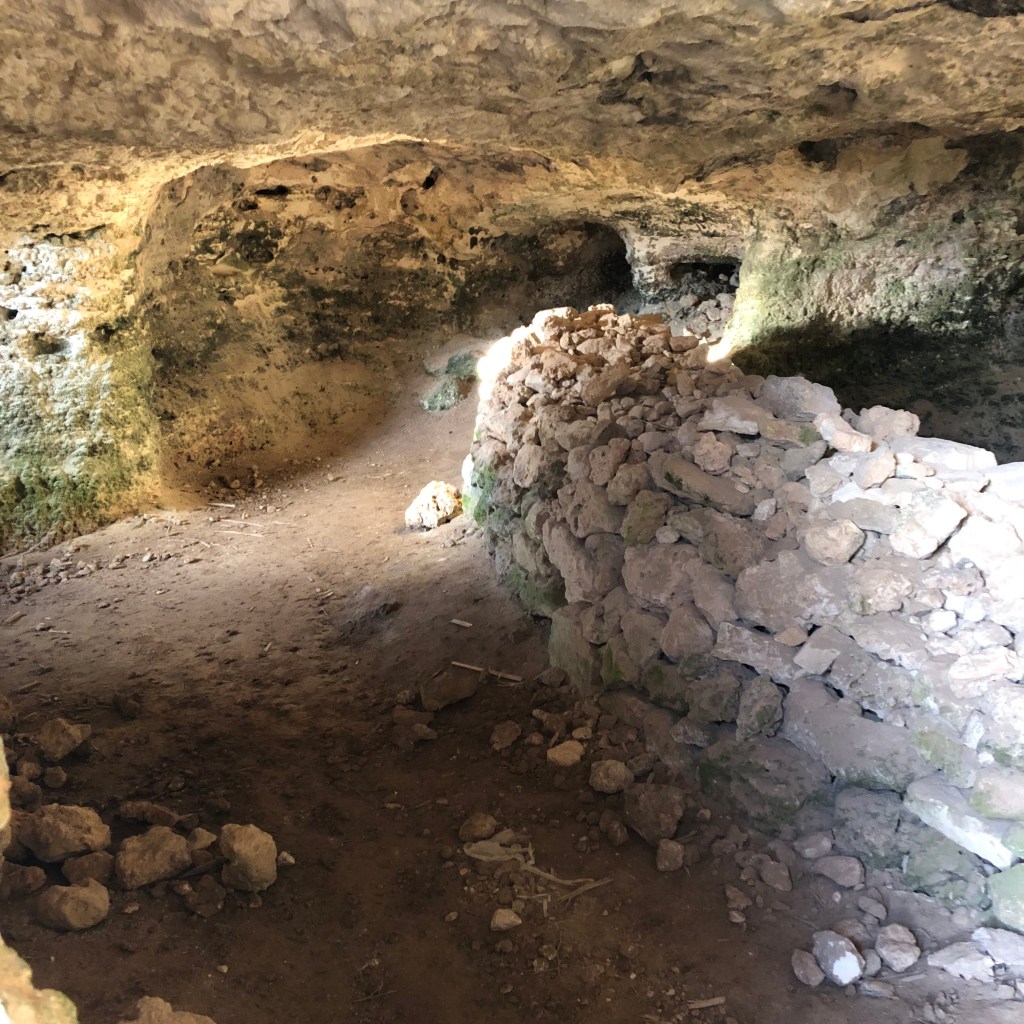
A Roman road with channels cut along the road to collect the water, also known as the Pilgrim’s Way because of being used for a pilgrimage to a sanctuary in Mellieha, carved crosses to keep company to pilgrims that sometimes carry chains, a menhir, caves and apiaries that could also have been used as a columbarium for funerary urns and dwellings.

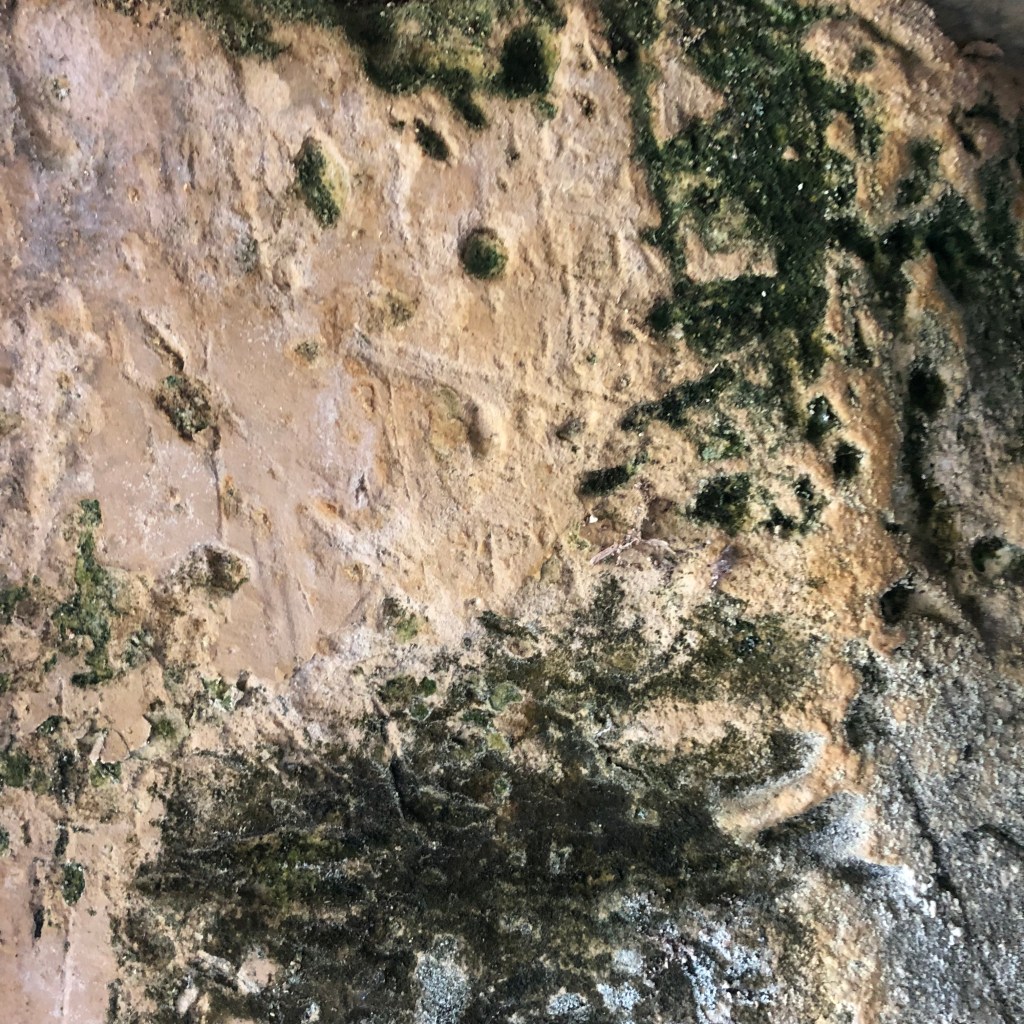
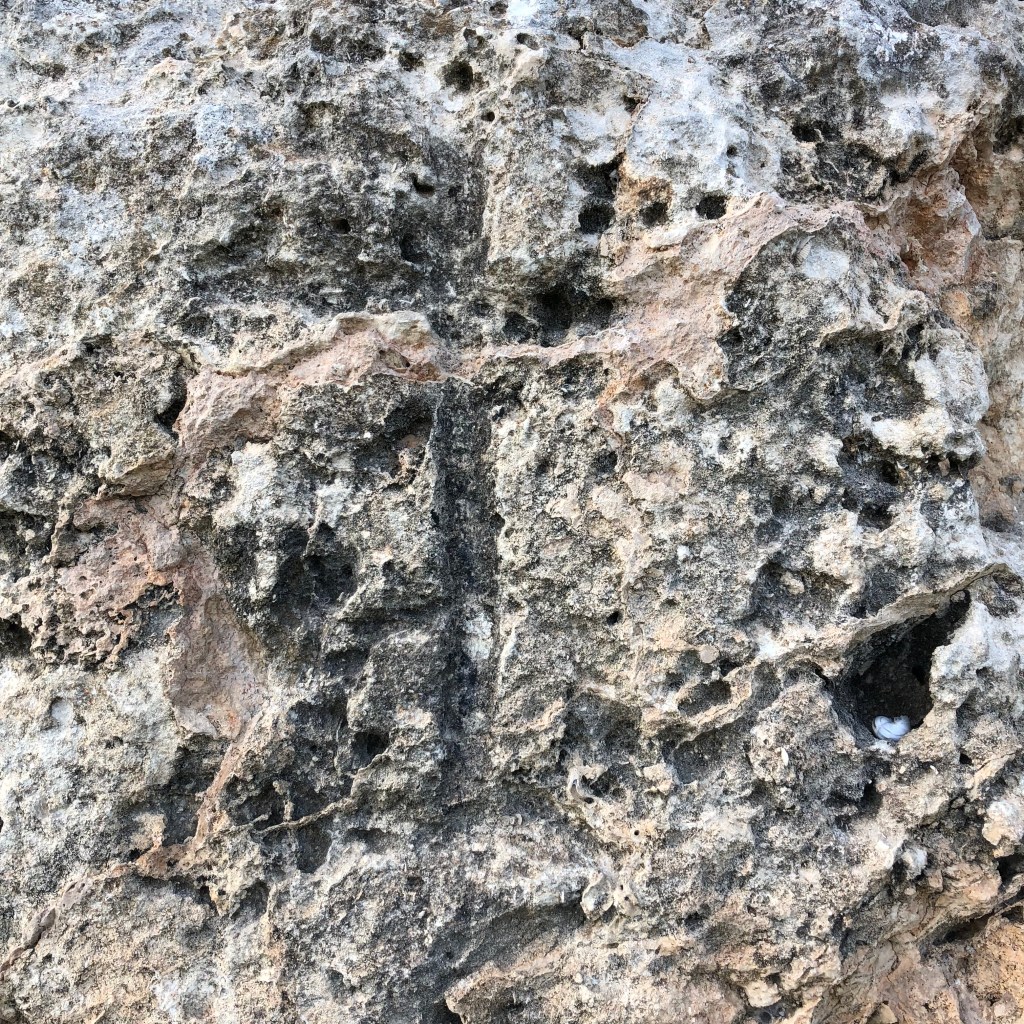


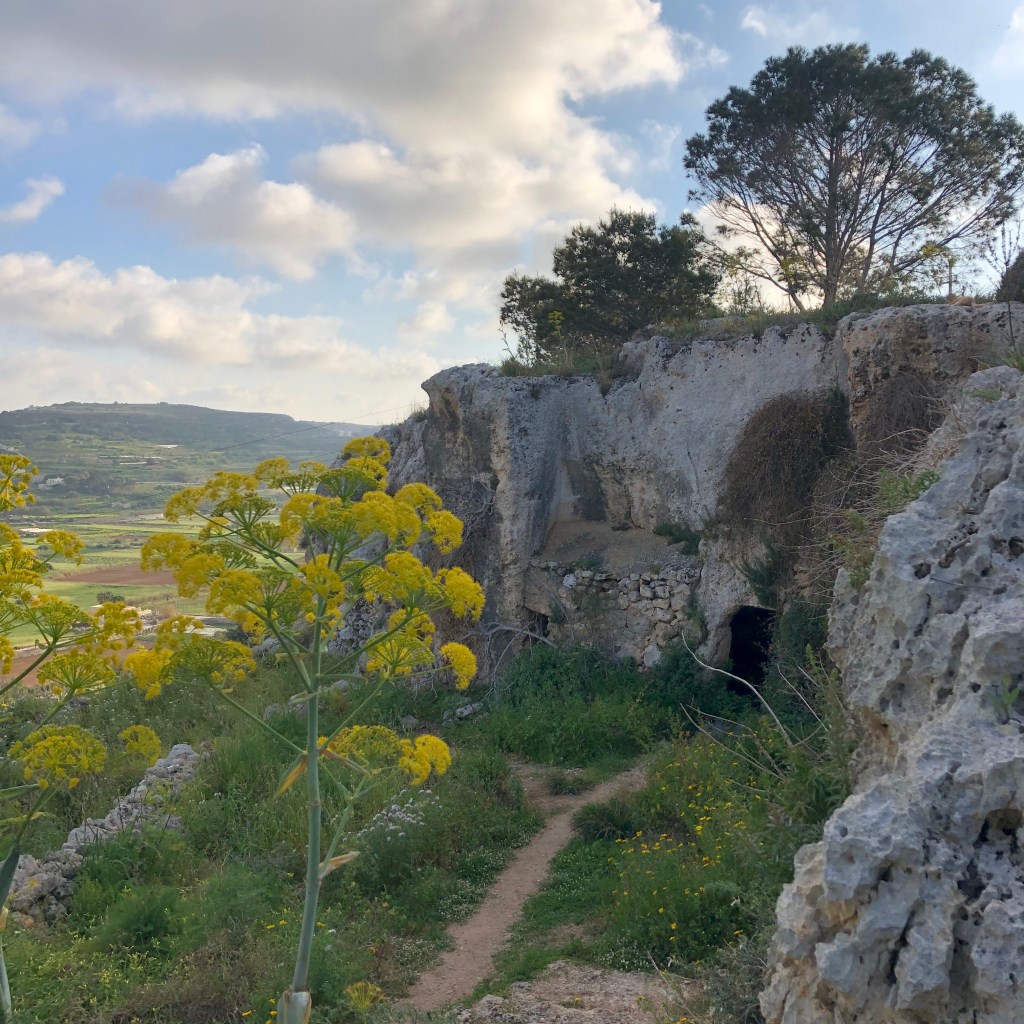
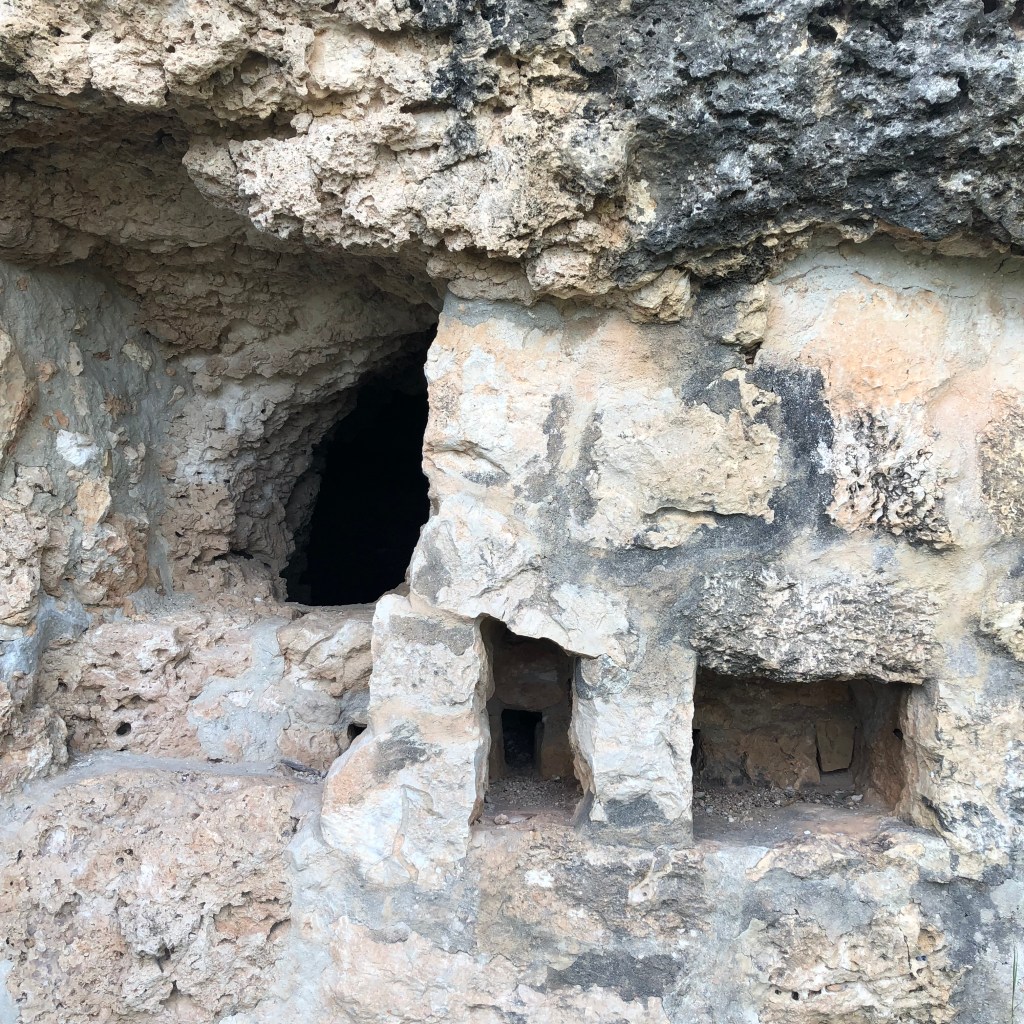

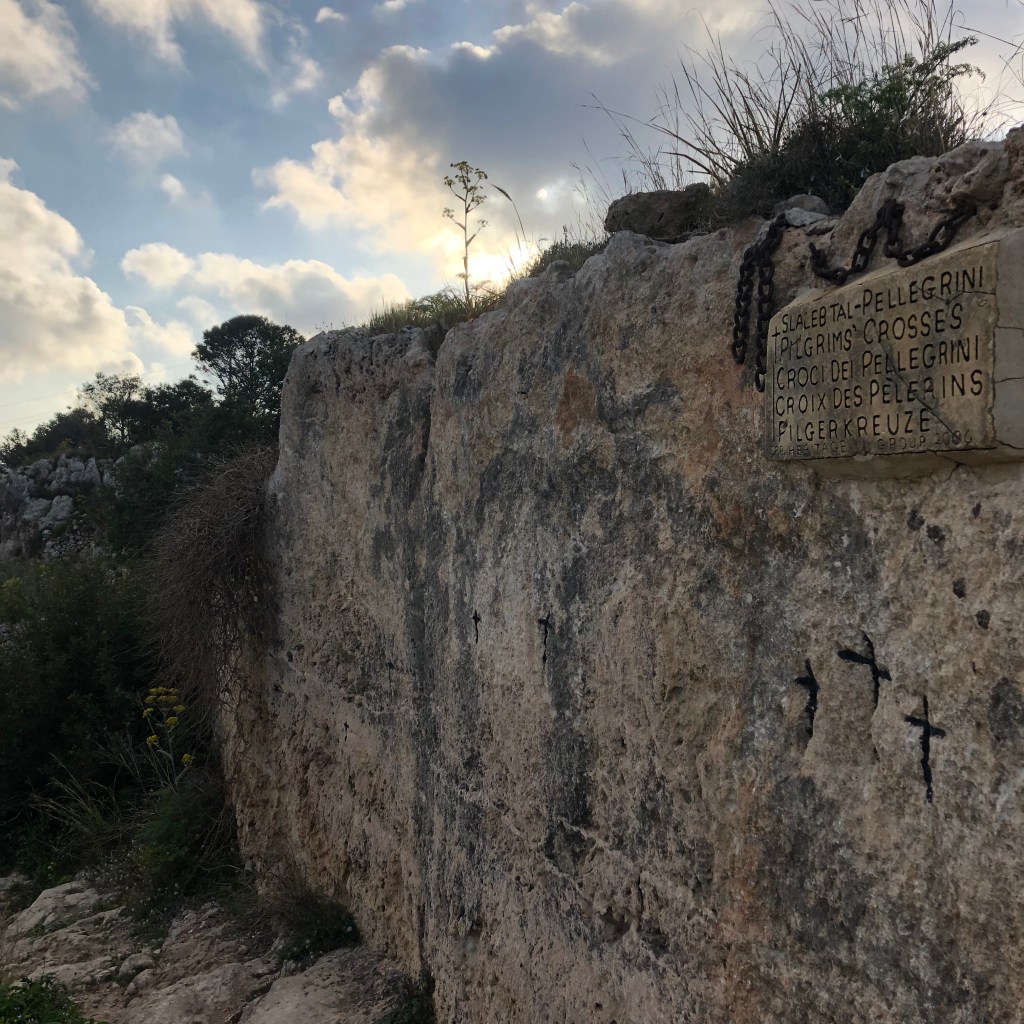
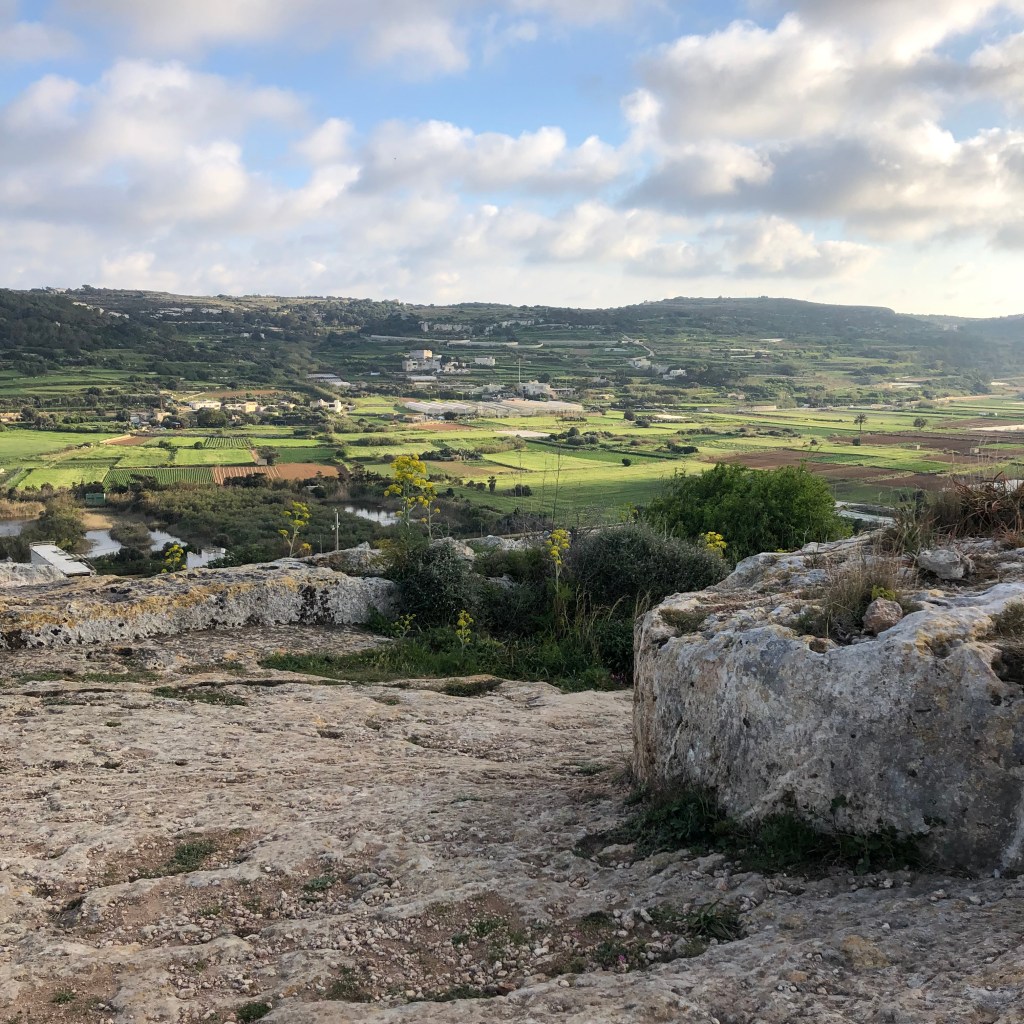
A Prehistoric granary that was later used as a water cistern, troglodyte dwellings that were used as shelters during air raids, a gorbog or farmer’s hut, Neolithic tombs where the dead were returned to the womb of Mother Earth in a fetal position (with the knees drawn up to the chest), a rectangular Punic tomb, Roman baths.


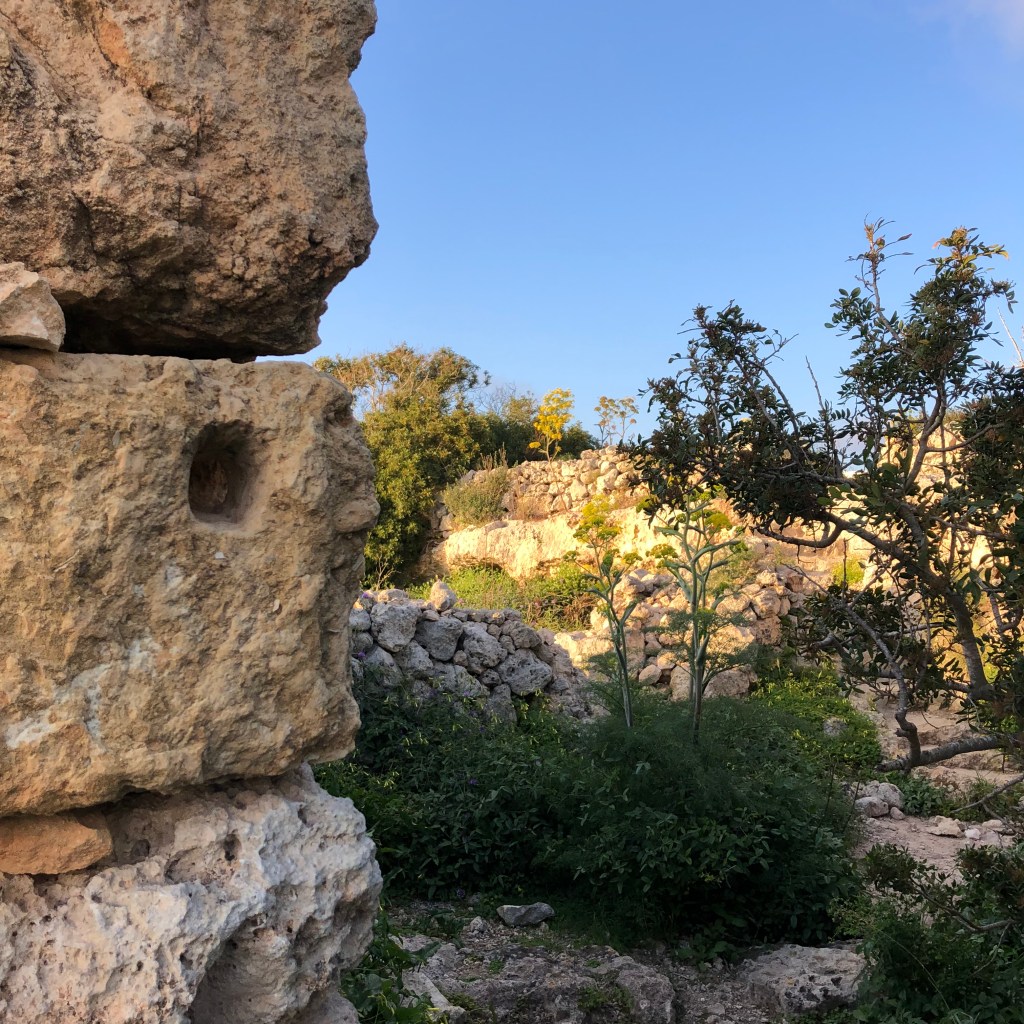


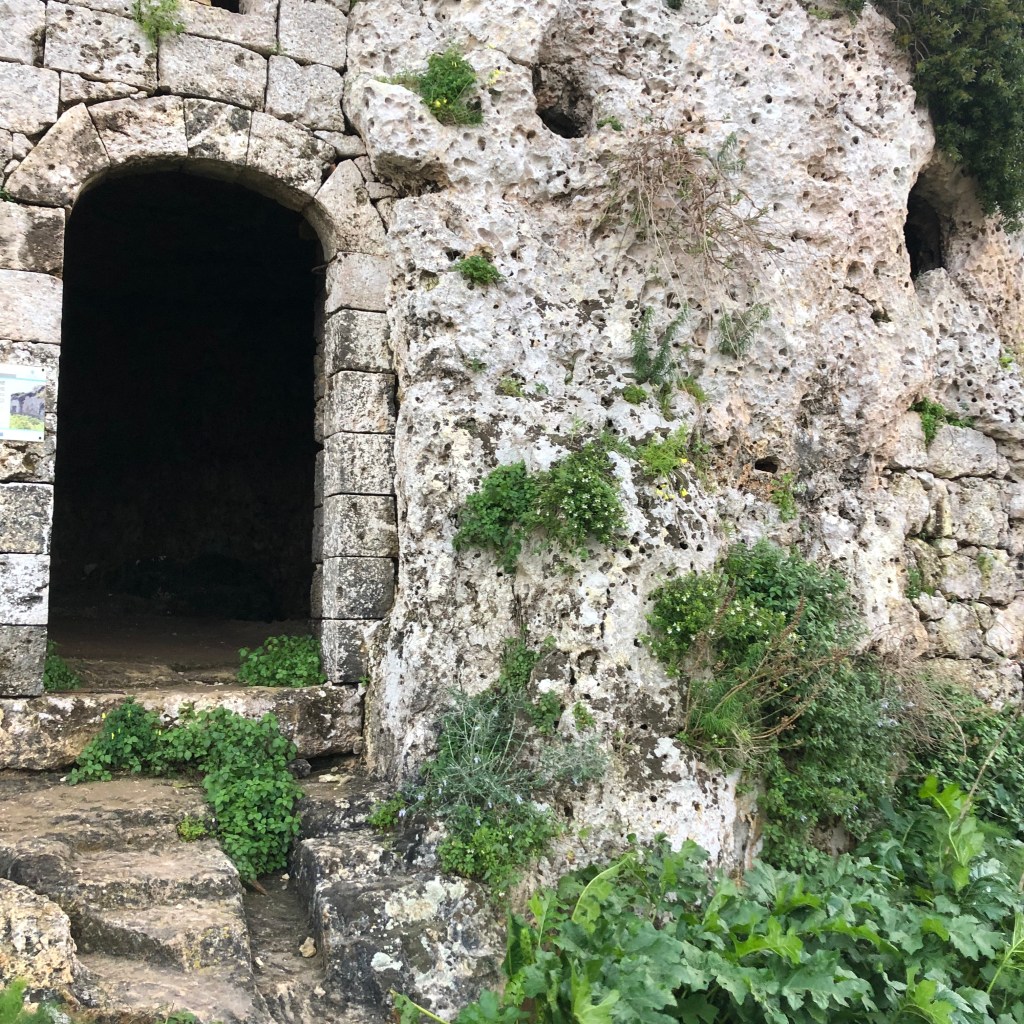
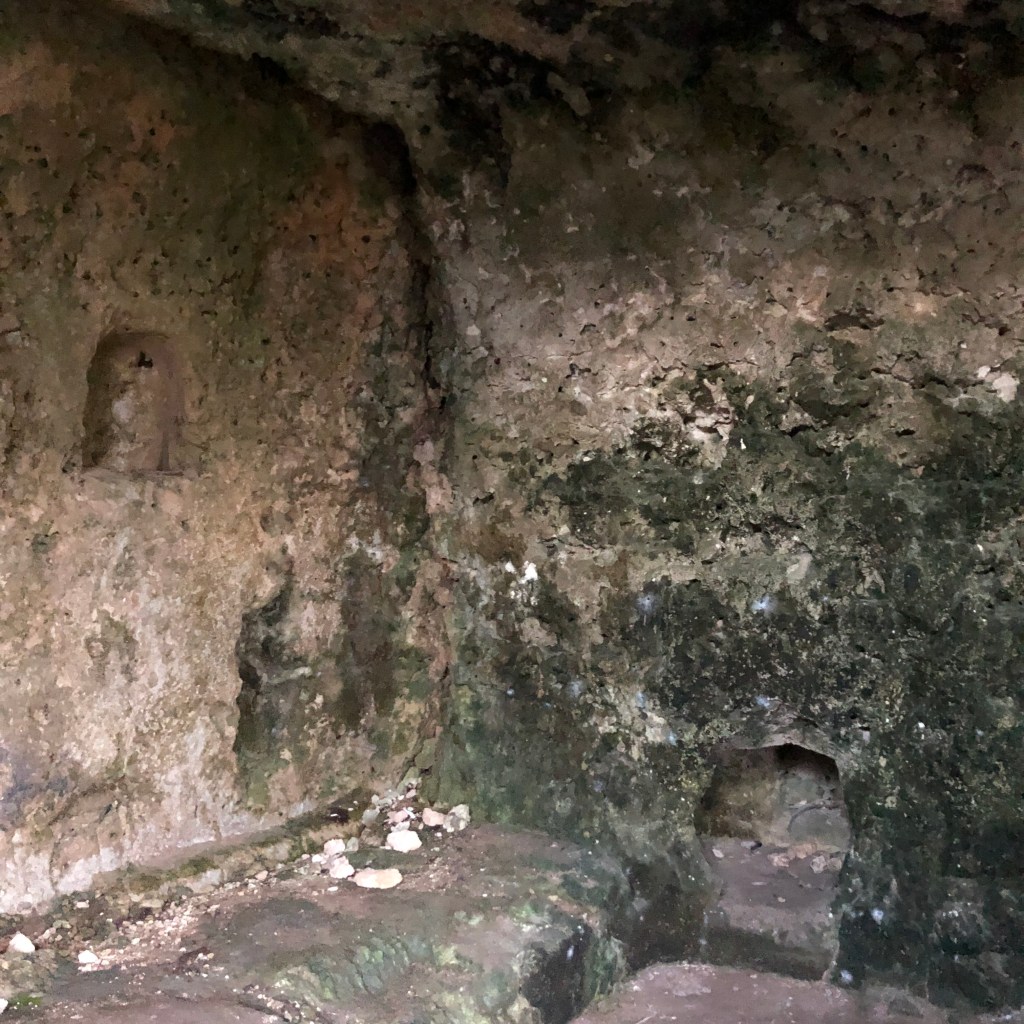


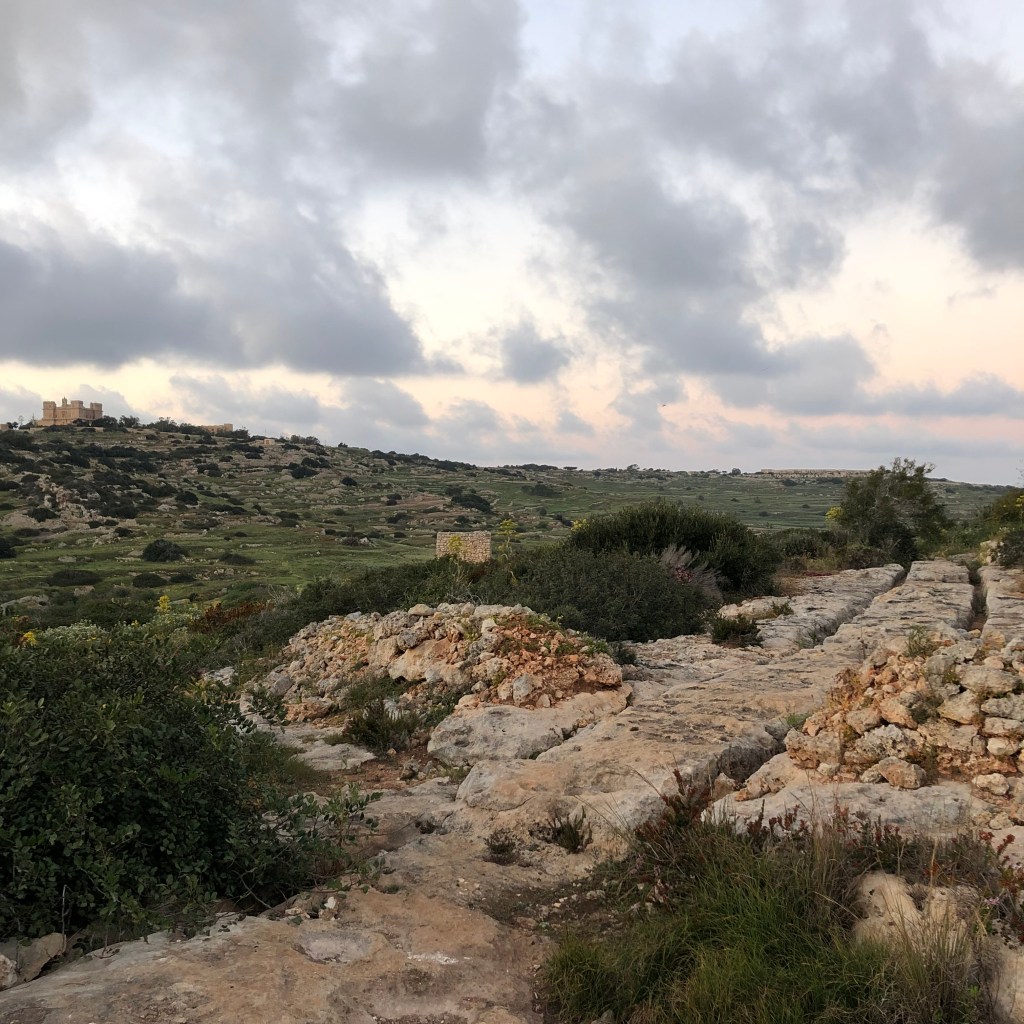
And last but not least, the mysterious cart ruts (raddet ir-roti). They are parallel groves cut into bare rock, between 1,32 and 1,47 meters wide. Shaped in a V form, with the lower part rounded about 2 centimetres from the bottom, they sometimes intersect or lead into the sea. How and when they were made remains a topic for further research and scientific debates.
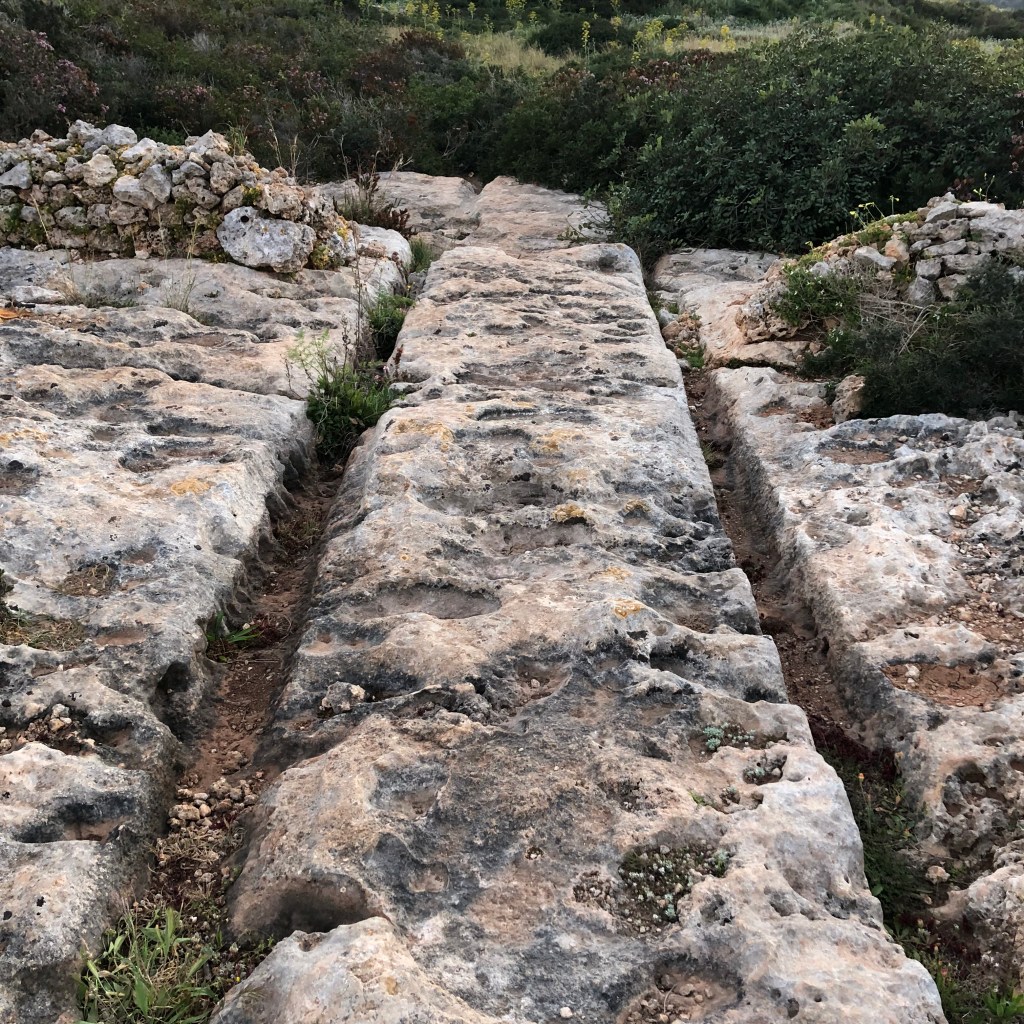


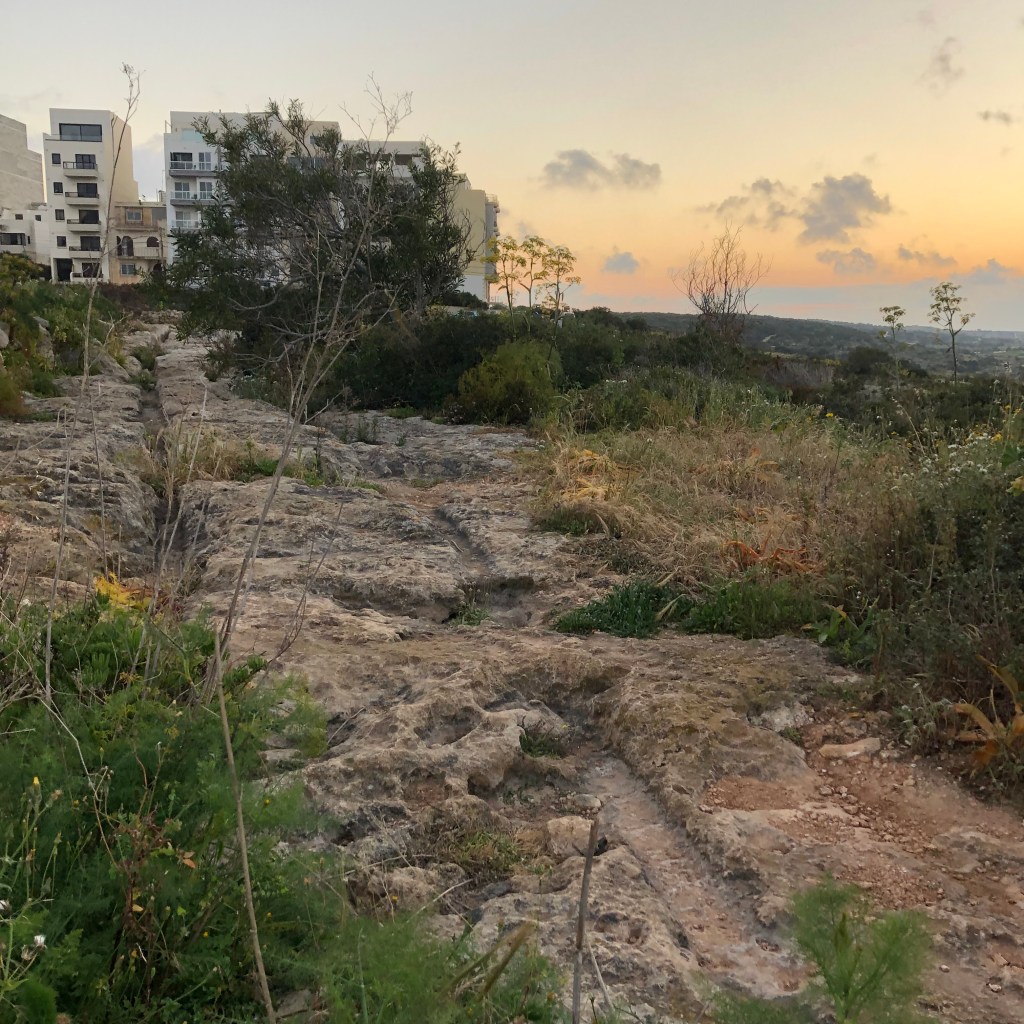
So my fascination with Neolithic times started with Gozo, in the mind-blowing Ġgantija temples and in Xemxija, San Pawl il-Bahar or Saint Paul’s Bay, where there is a Heritage Trail that covers thousands of years of human steps.
Saint-Paul’s Bay is called after THE (apostle) Saint Paul, saved from a ship-wreckage by friendly locals. Malta itself is probably called after bee’s sweetness, honey (in ancient Greek, seemingly), or maybe “haven” (in Phoenician). The wreck I felt I was then rested in the good hands of beautiful stories, told and untold among the rocks and stones.

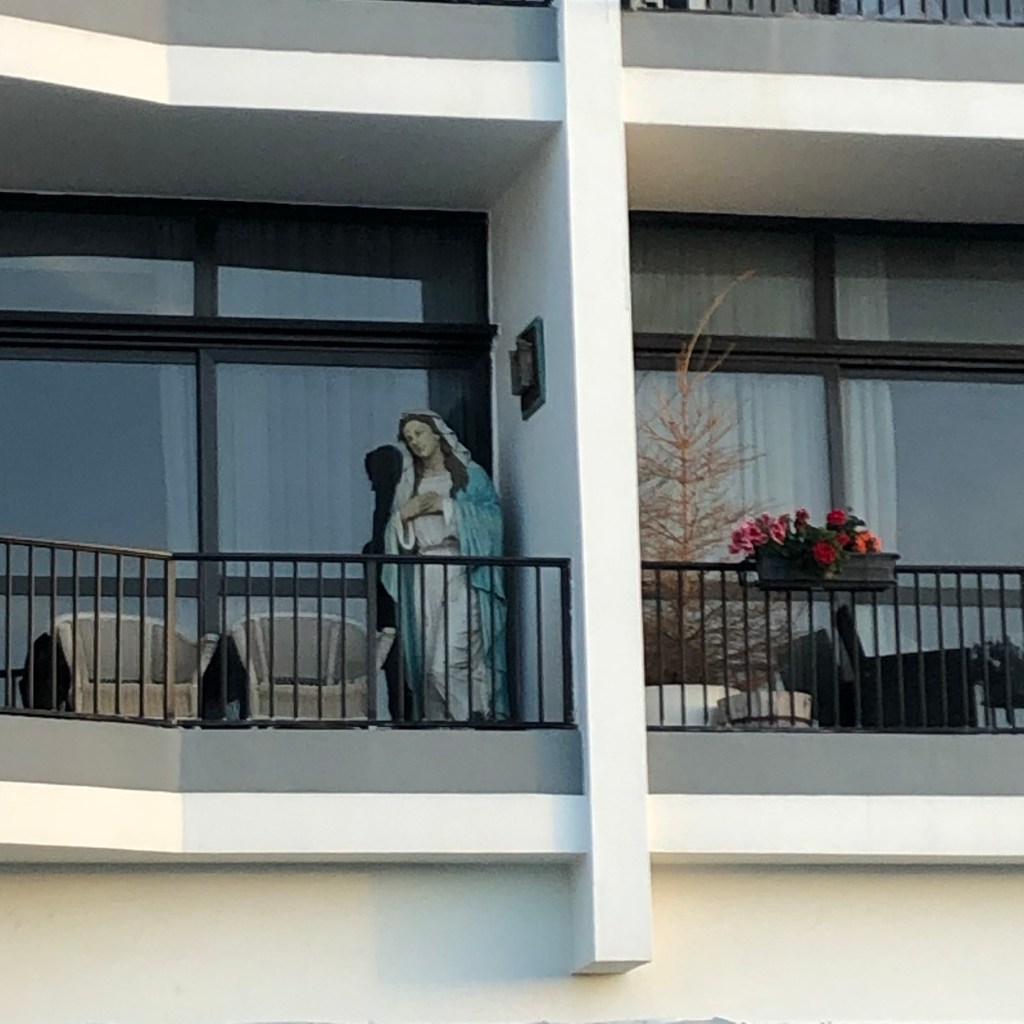
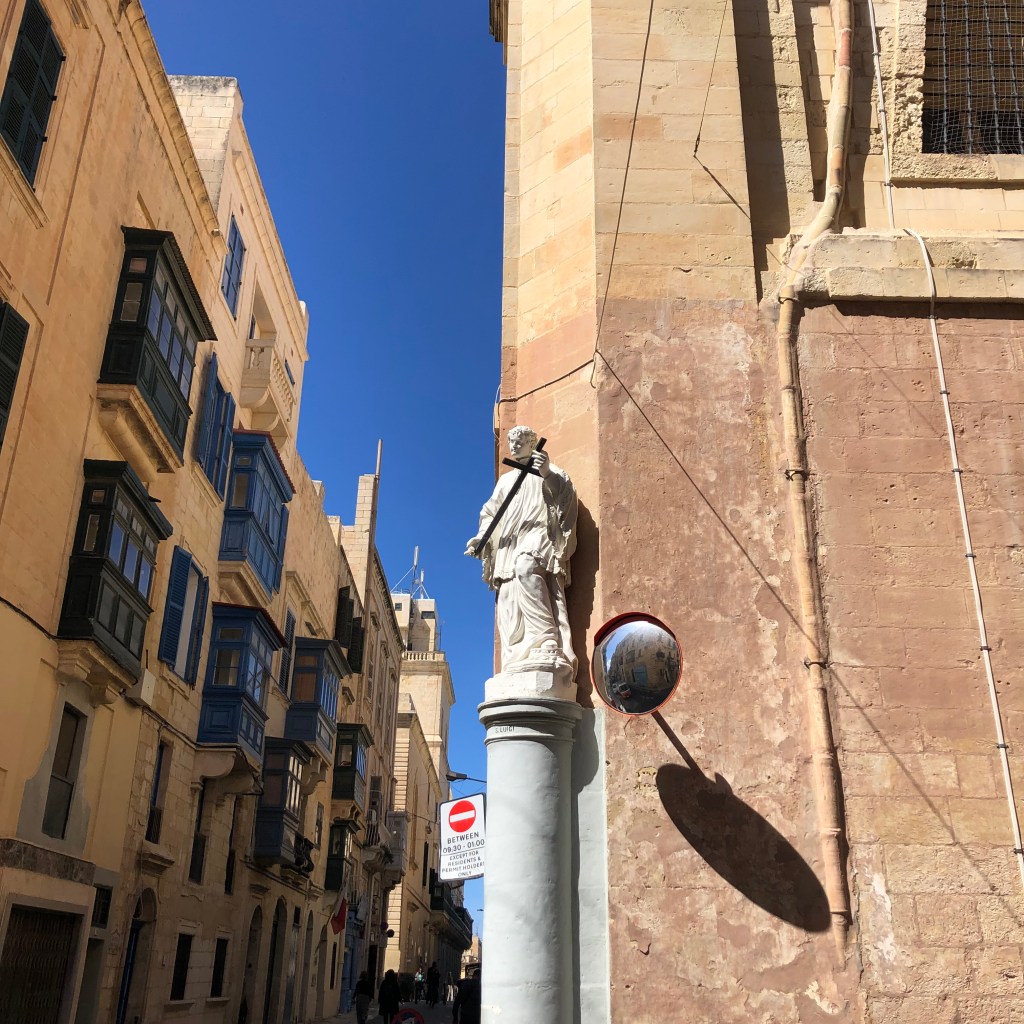
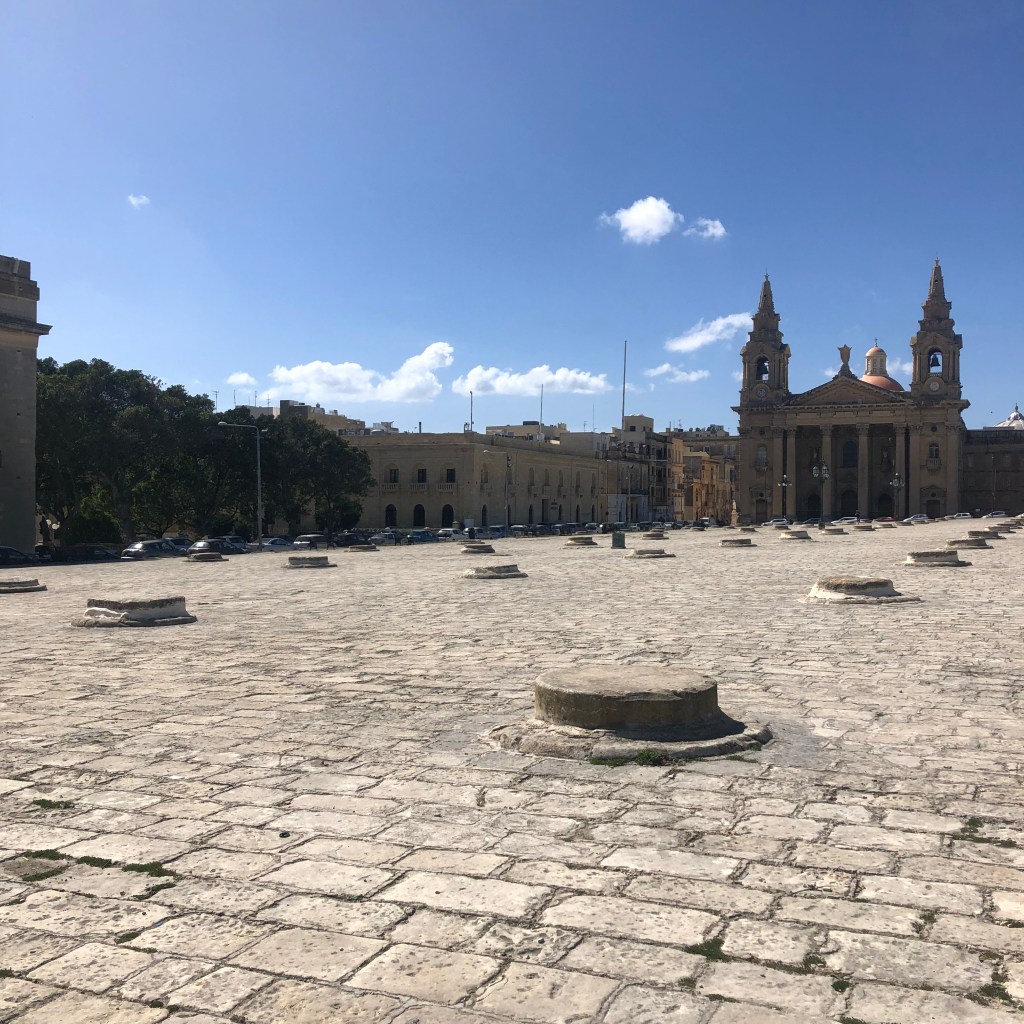
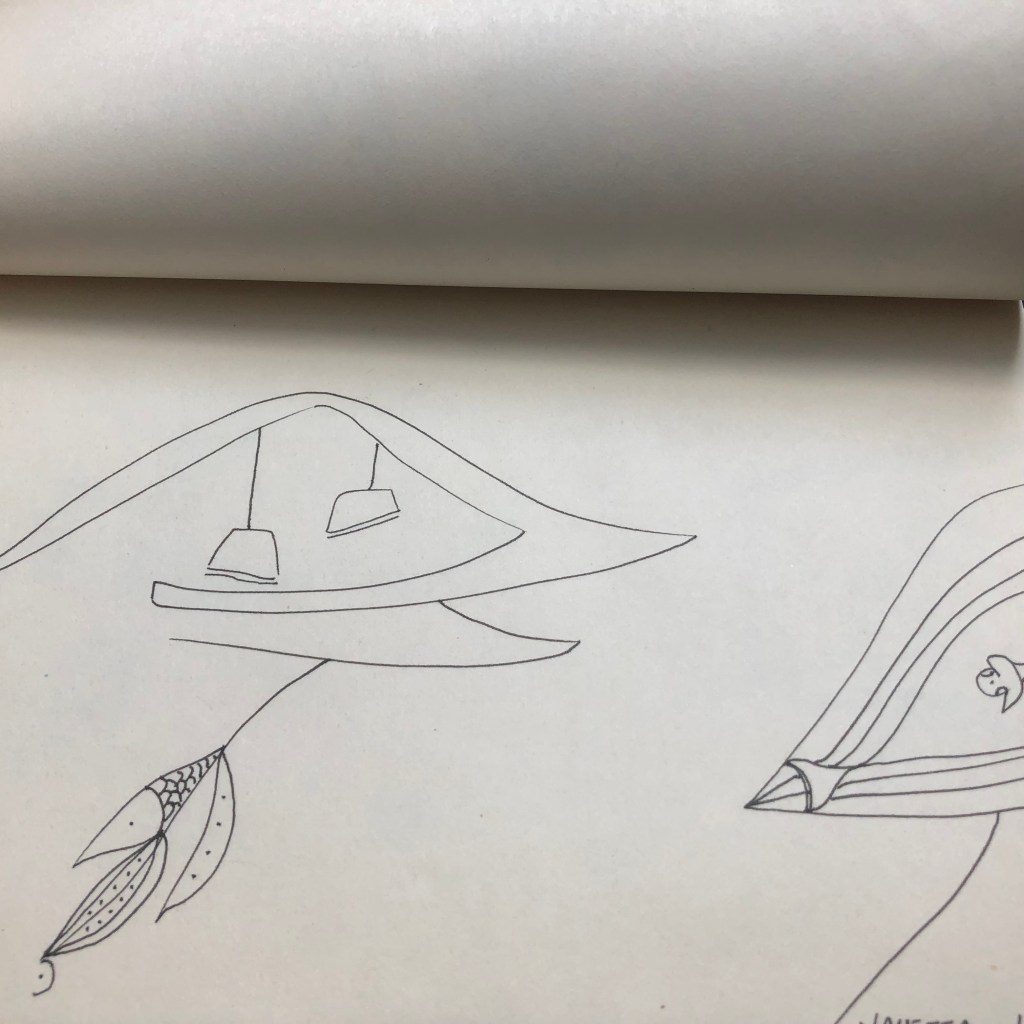
In medieval Europe, to be praised was considered unlucky, a source of malice and envy, so protective words such as « God bless it » and « As God will » were used to avert the evil eye. Worship… there was a lot of it in the air.
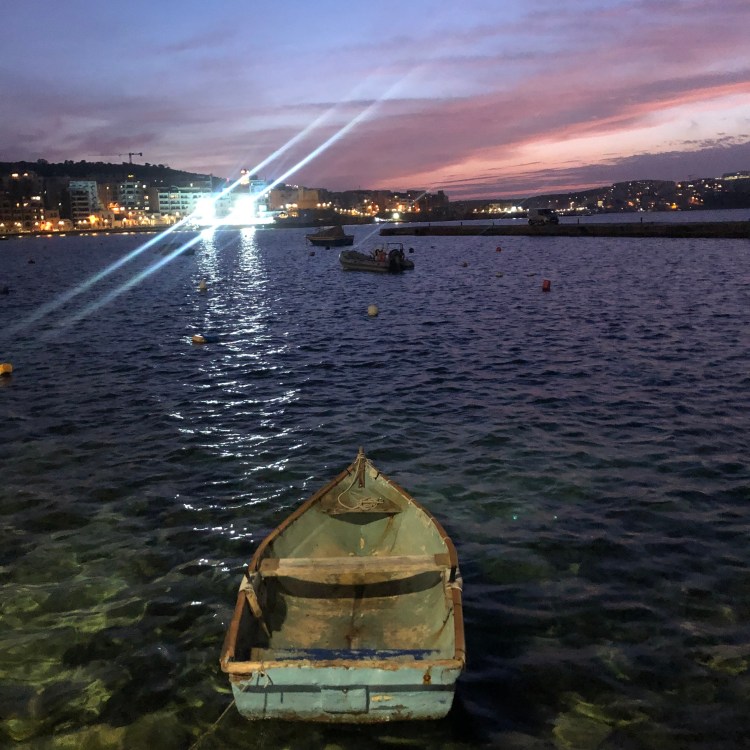
Along the coast an archipelago of boats included a few traditional ones, colourful fishing boats called luzzus. The design of the luzzu fits with the old stones, dating back to Phoenician days. Its painted eyes on each side of the bow are said to bring good luck, health and protection at sea. The Eye of Osiris (or Horus) wards off the evil eye.
luzzus in the sea of boats

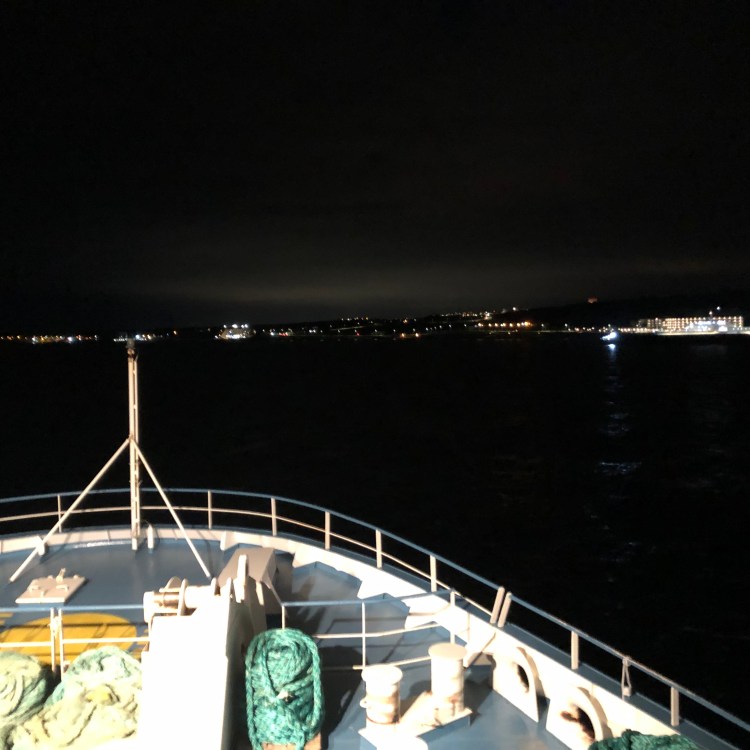


Given that Malta endured hell and (something like 15000) tons of bombs during WW2, it got yet another cross after the war was over. The George Cross, Britain’s highest civilian honour for bravery. An entire population of heroes. How to live up to that for the Maltese generations appearing since such a painful period remains an open question for the tourist I am.
Valletta and the walled city of Mdina, very close to Rabat, have impressive Christian places to visit, and pray in if it’s in one’s habits, choices or traditions.
cathedral criminal genius
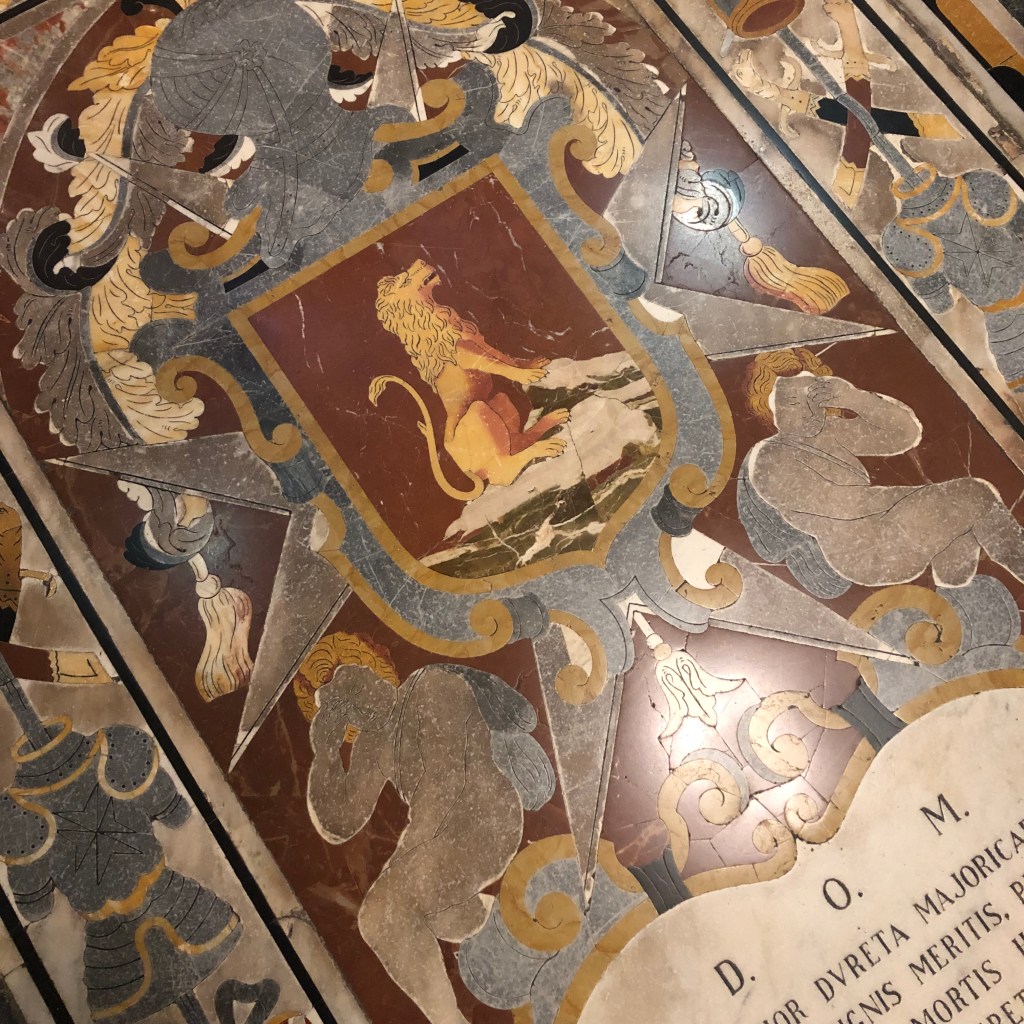
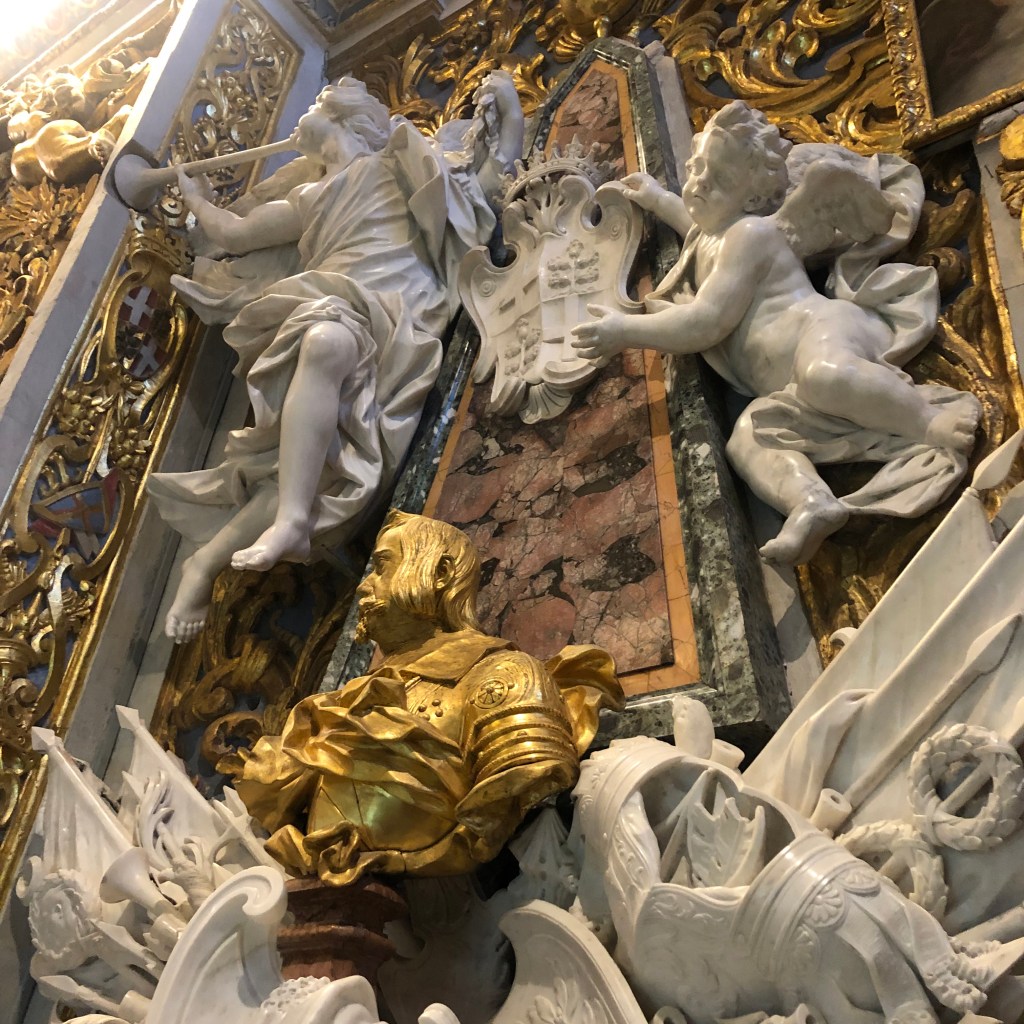
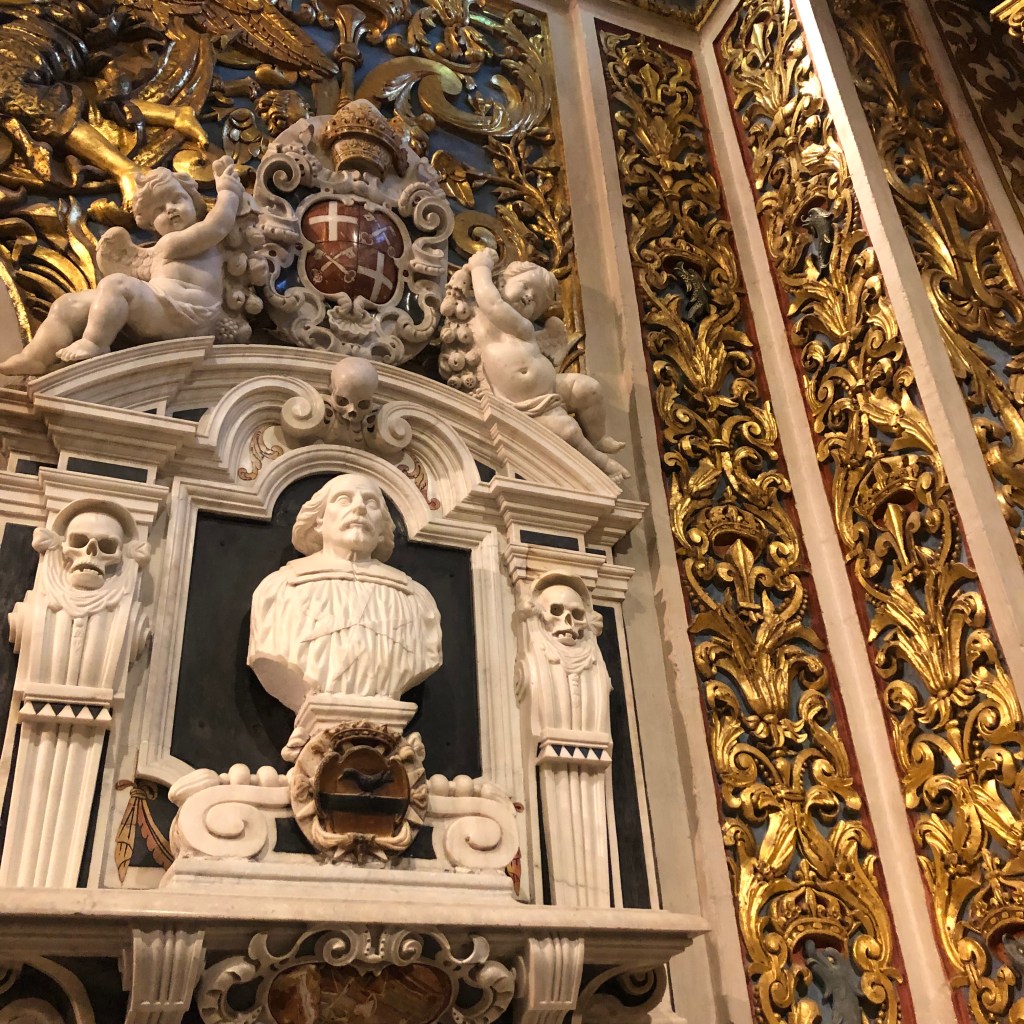
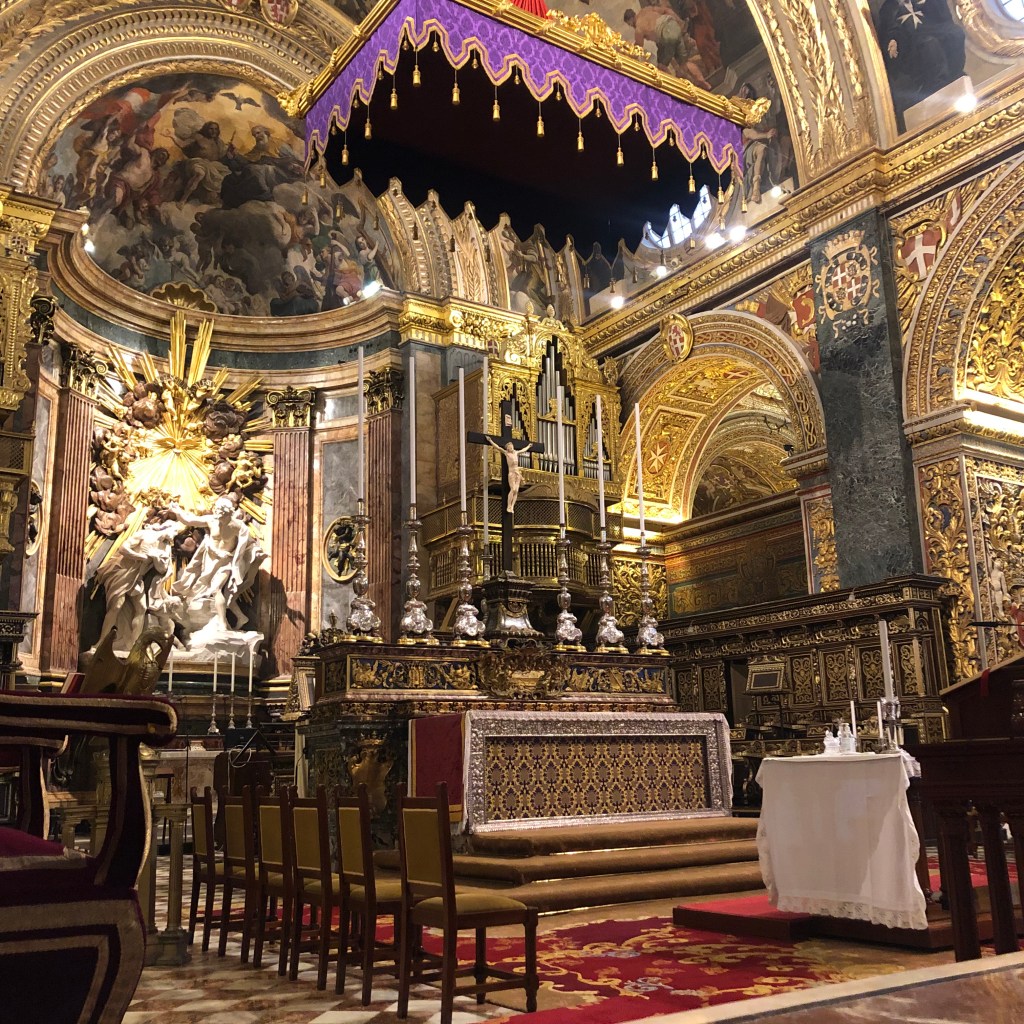
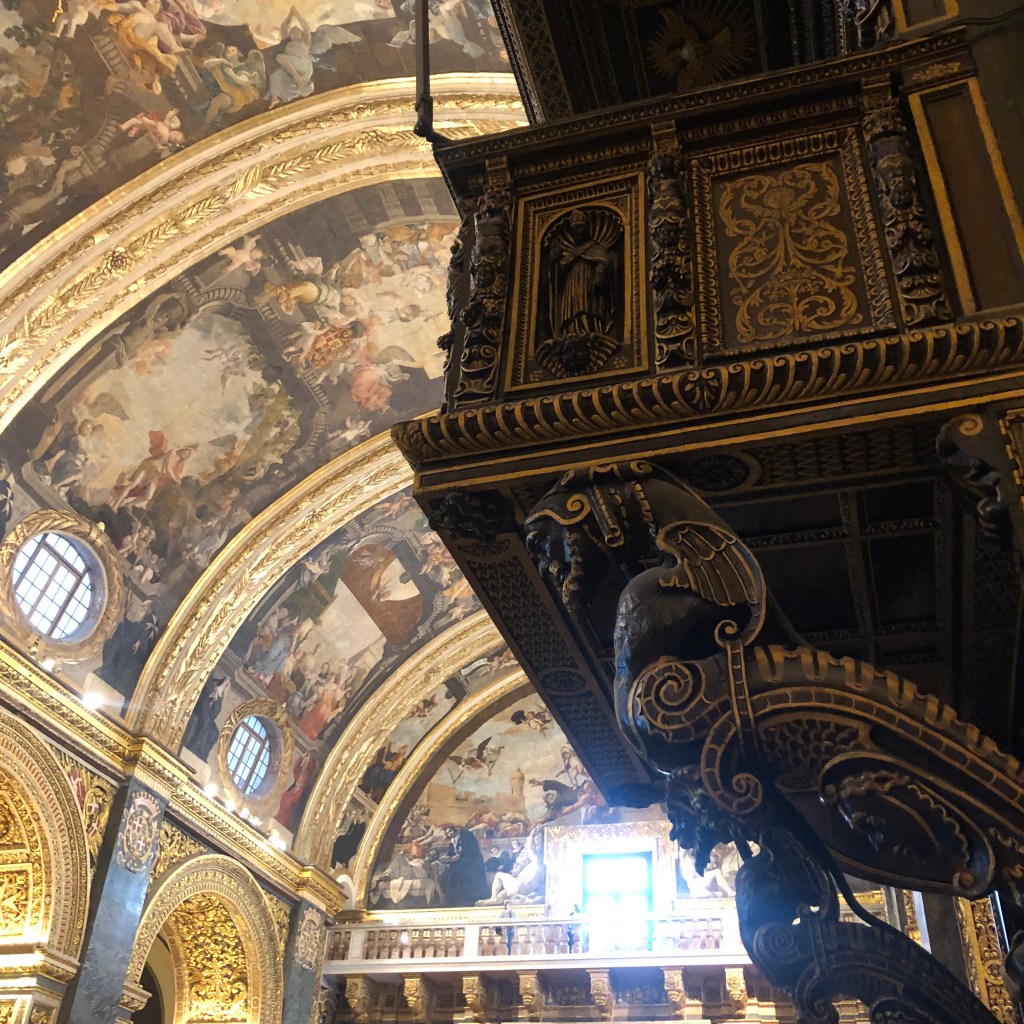
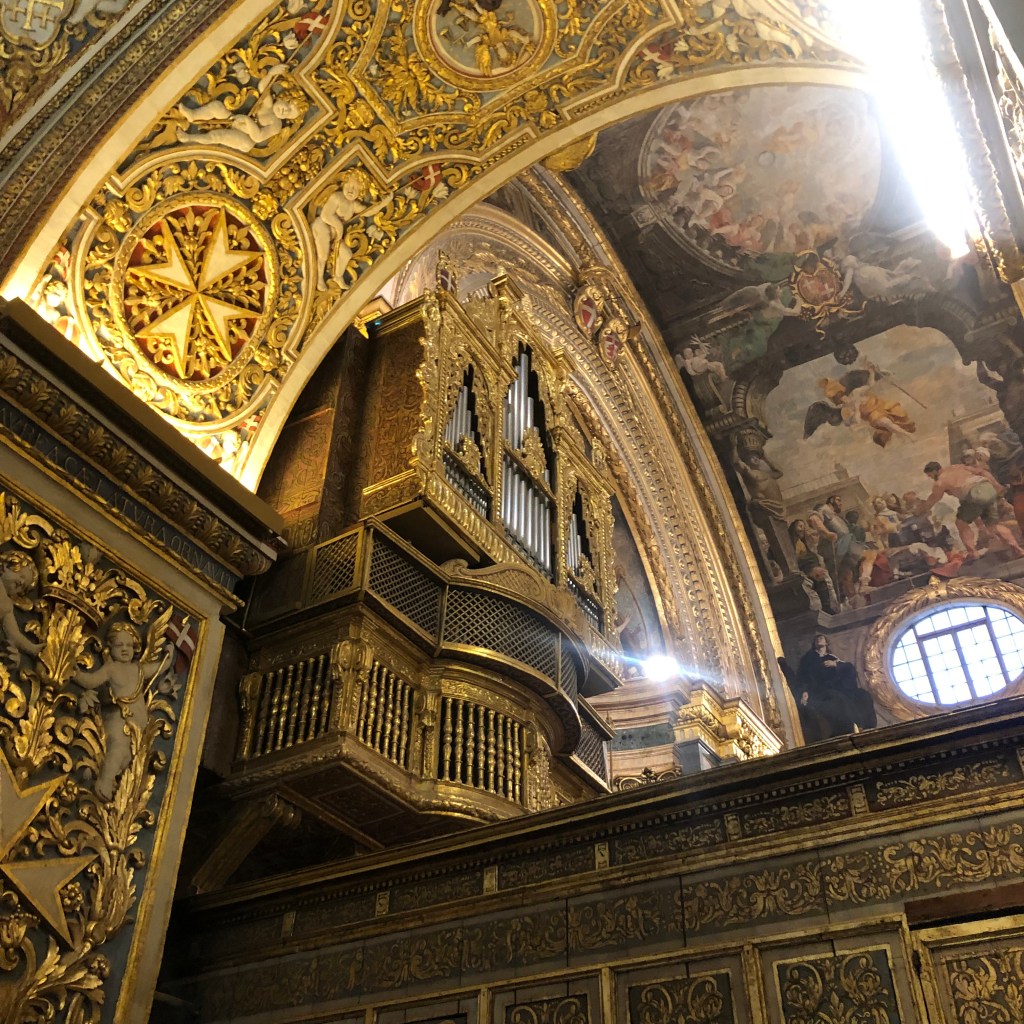
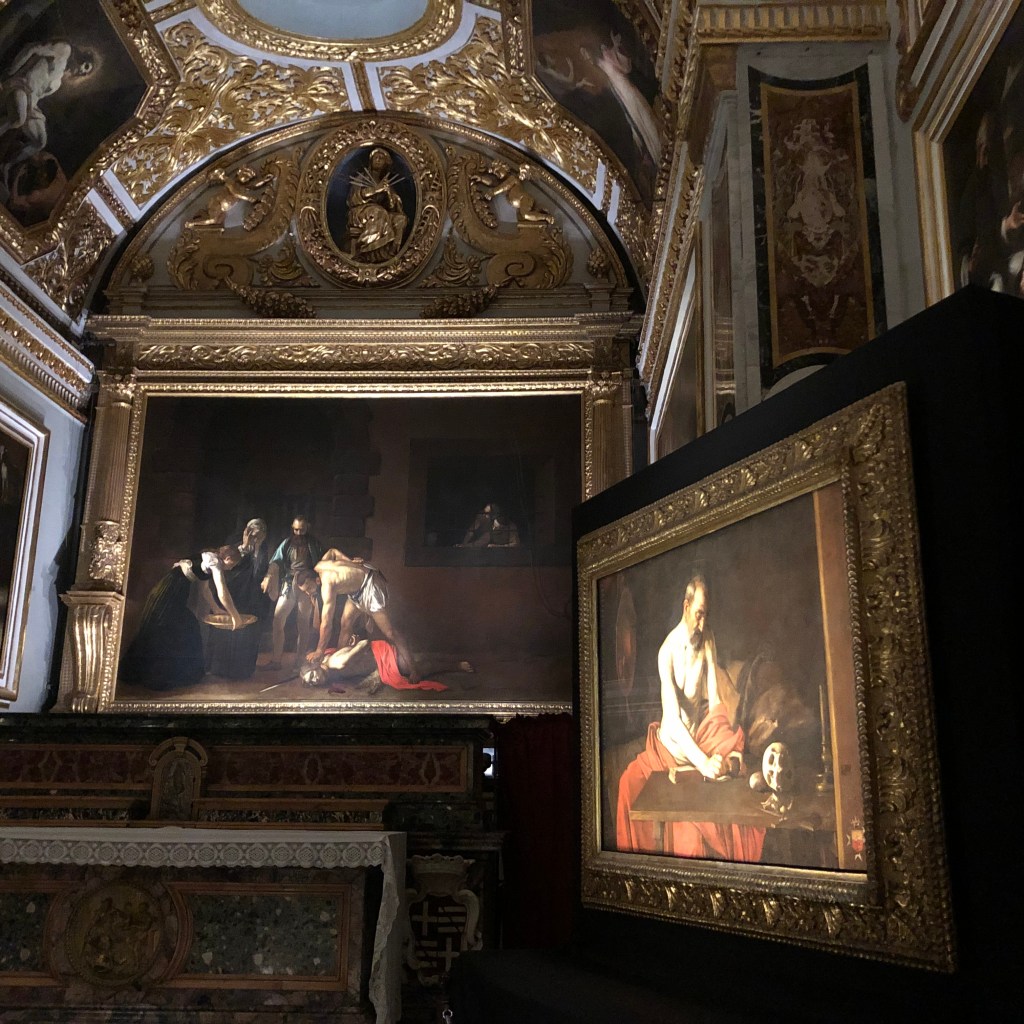
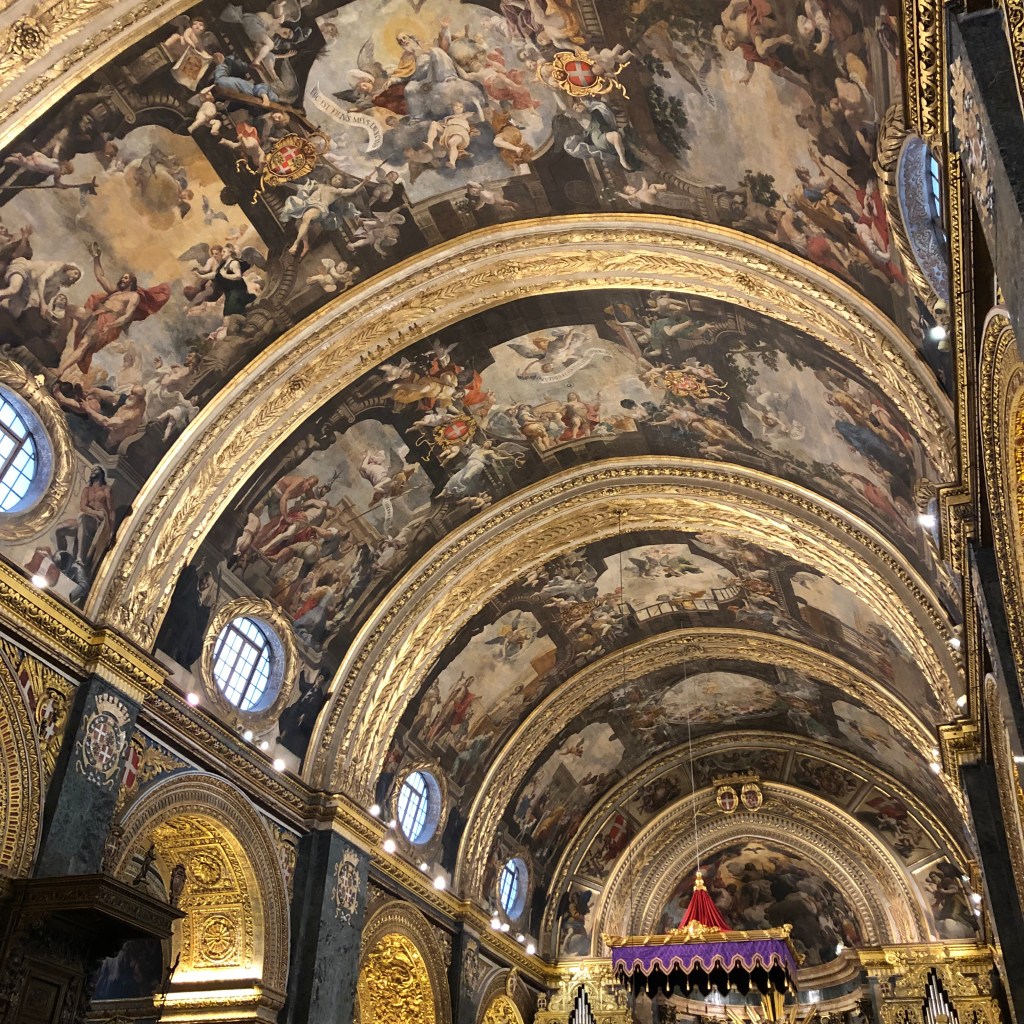
Saint John’s Co-Cathedral in Valletta is among the largest cathedrals in the world and dedicated to Saint John the Baptist. It was built by the wealthy Order of Saint John of Jerusalem, also known as the Knights of Malta, in the 1570s.
Apart from being literally covered in marble and having works that wouldn’t go down too well if they were made today, it has the only signed Caravaggio. The criminal genius was allowed to paint for the Order despite also being an established and recognised murderer, but ended up in a fight and having to flee again.




walled silence
Mdina, Citta Notabile (noble city) and capital before being deserted and called “The Silent City”, is more than 4000 years old and was home for Saint Paul after his shipwreck. Its silence felt like an open air church.
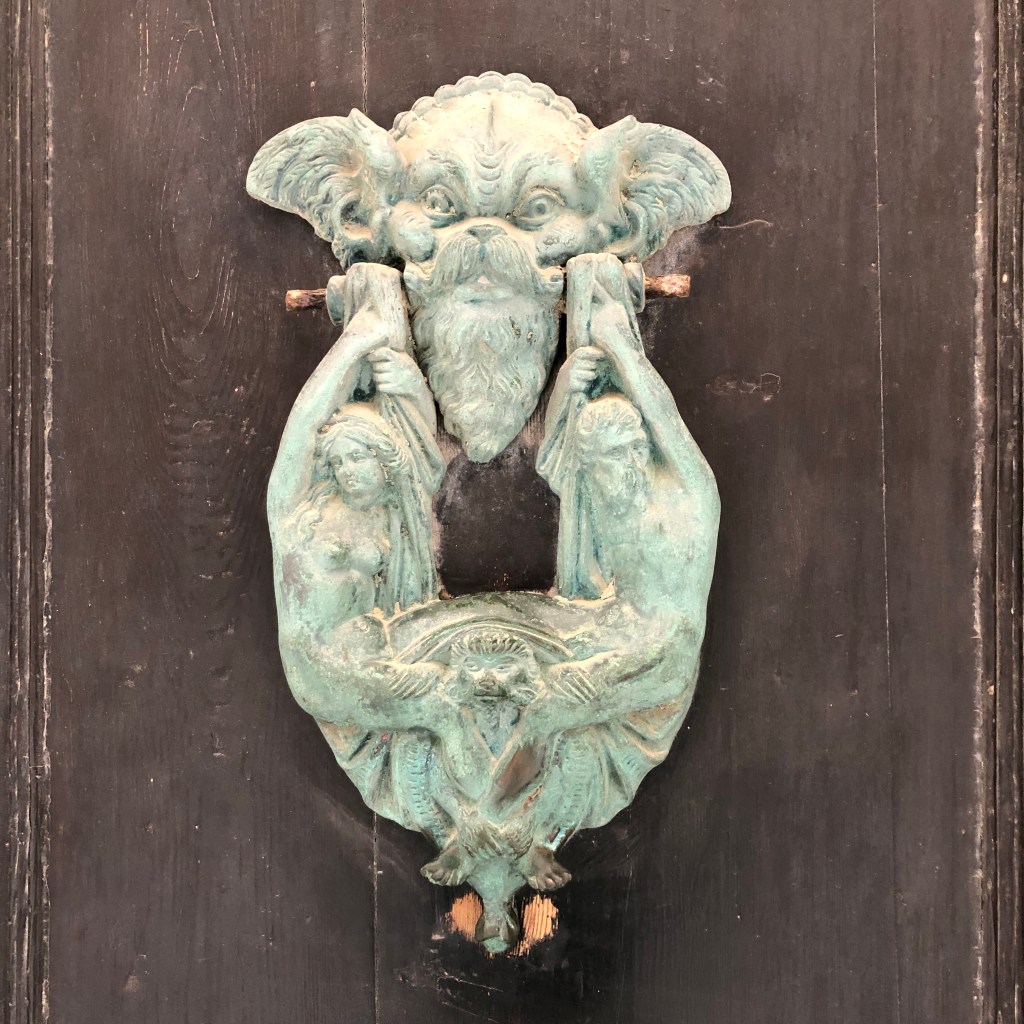


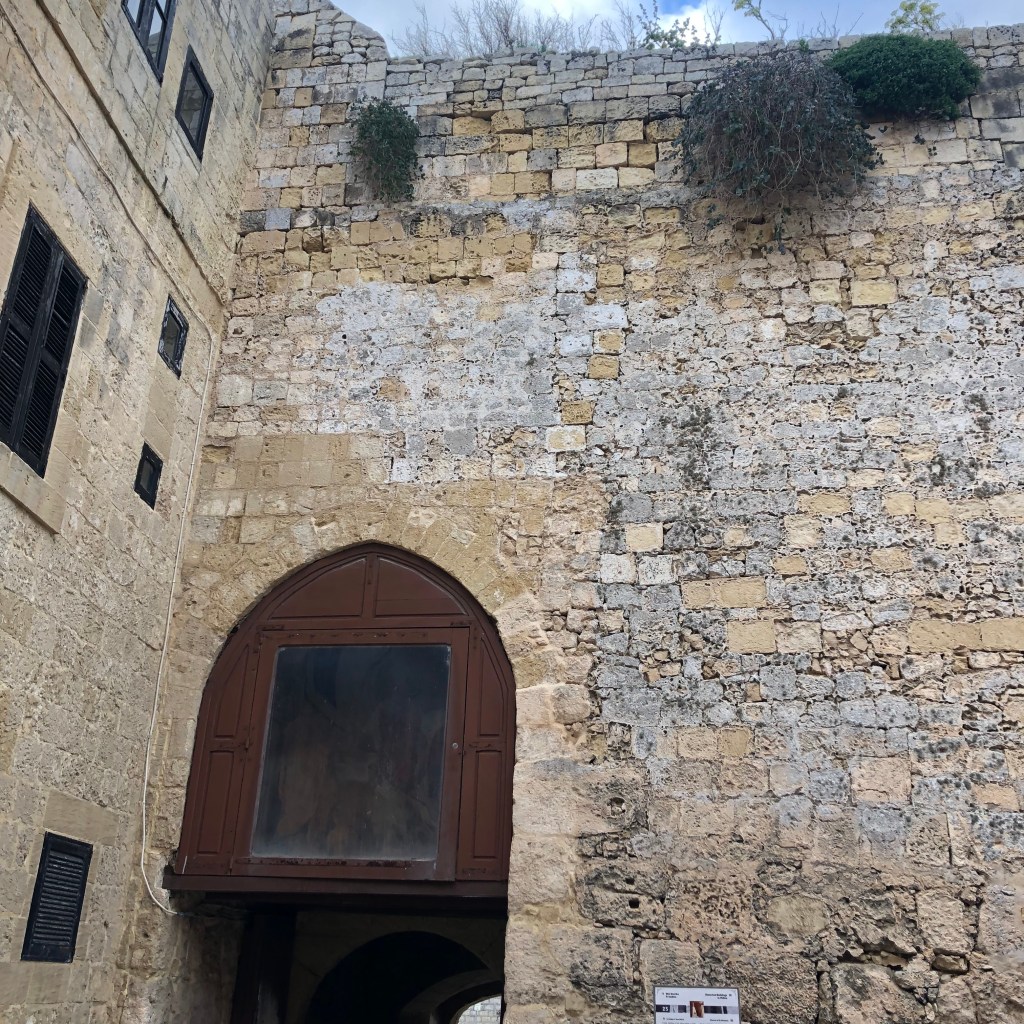

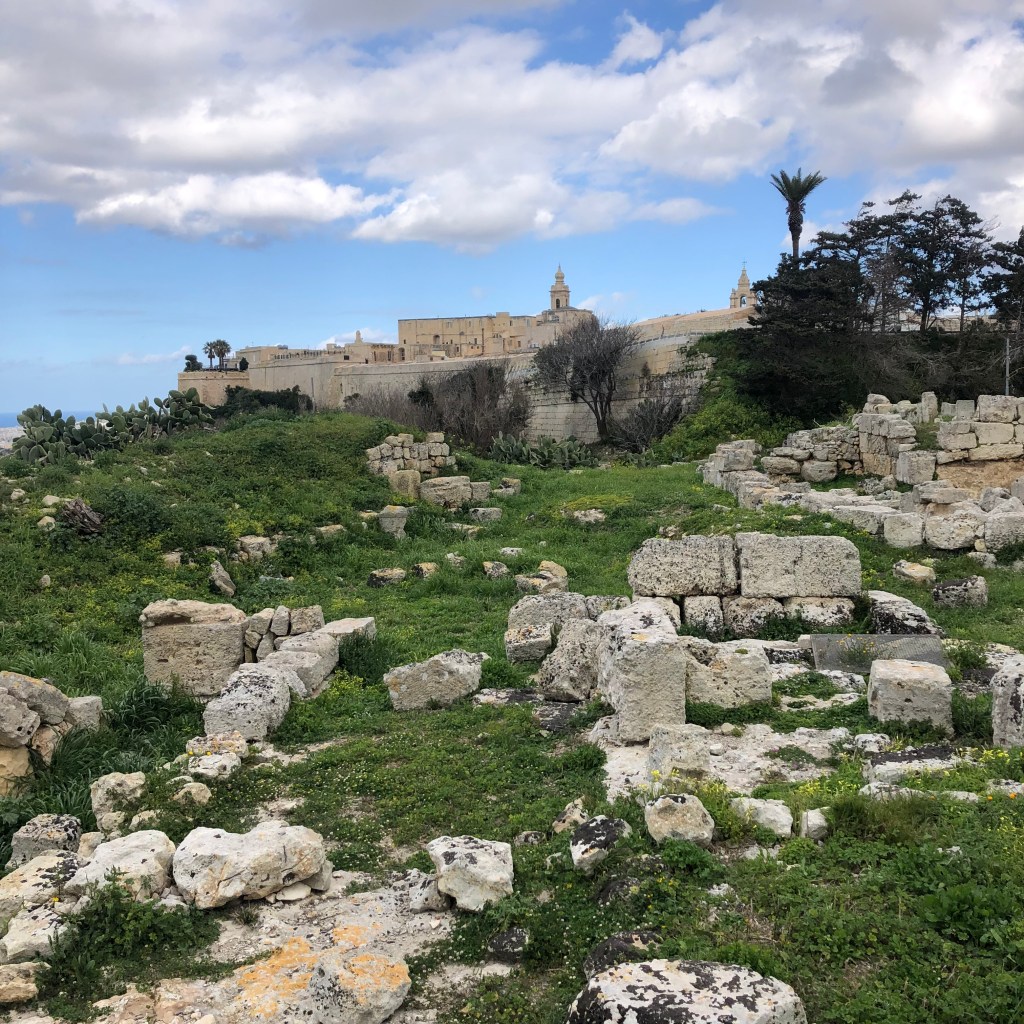

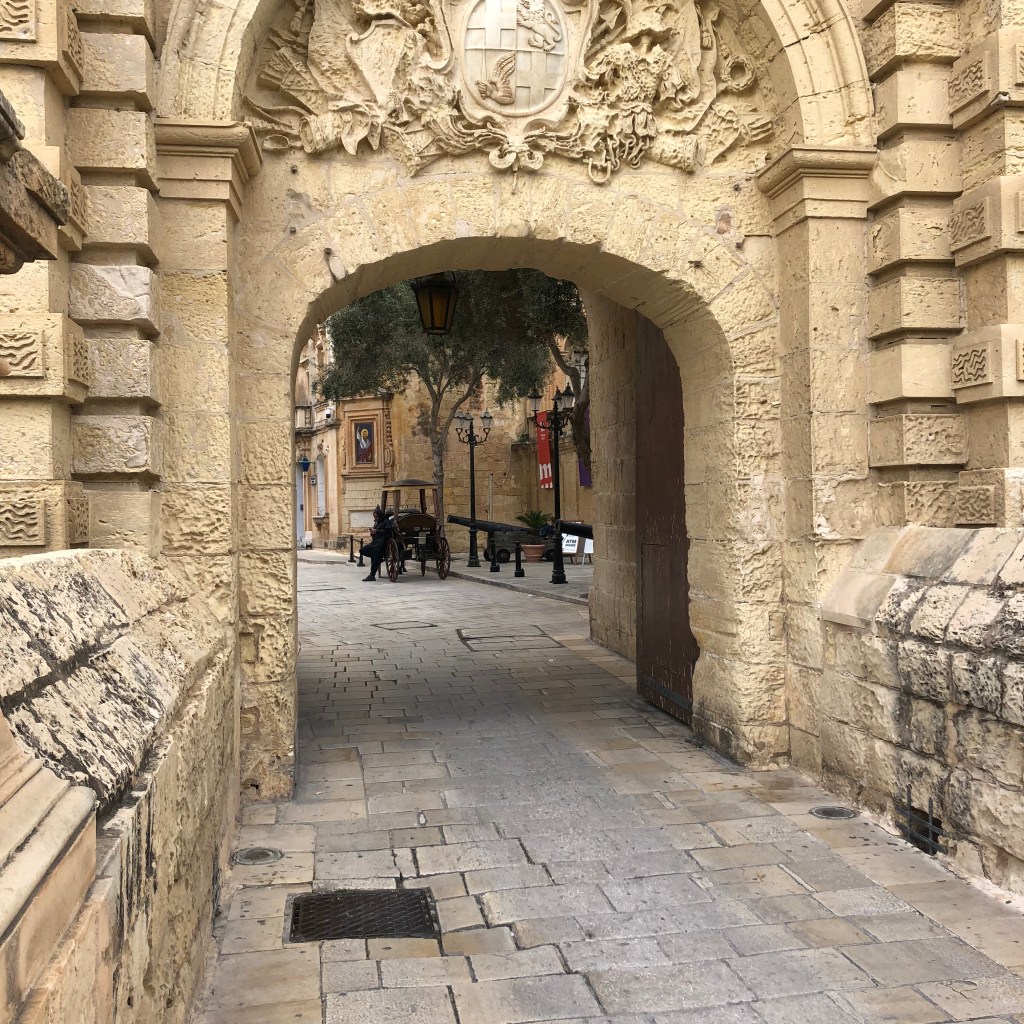


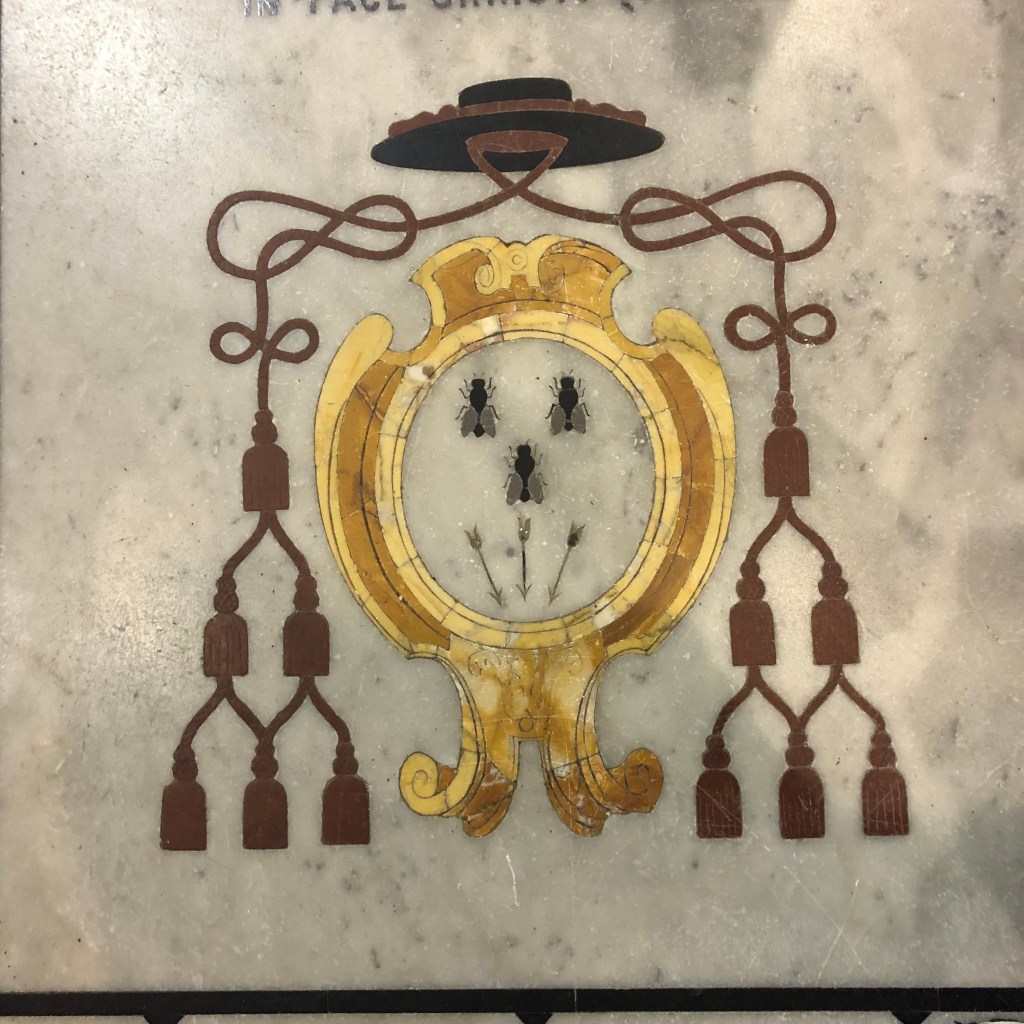

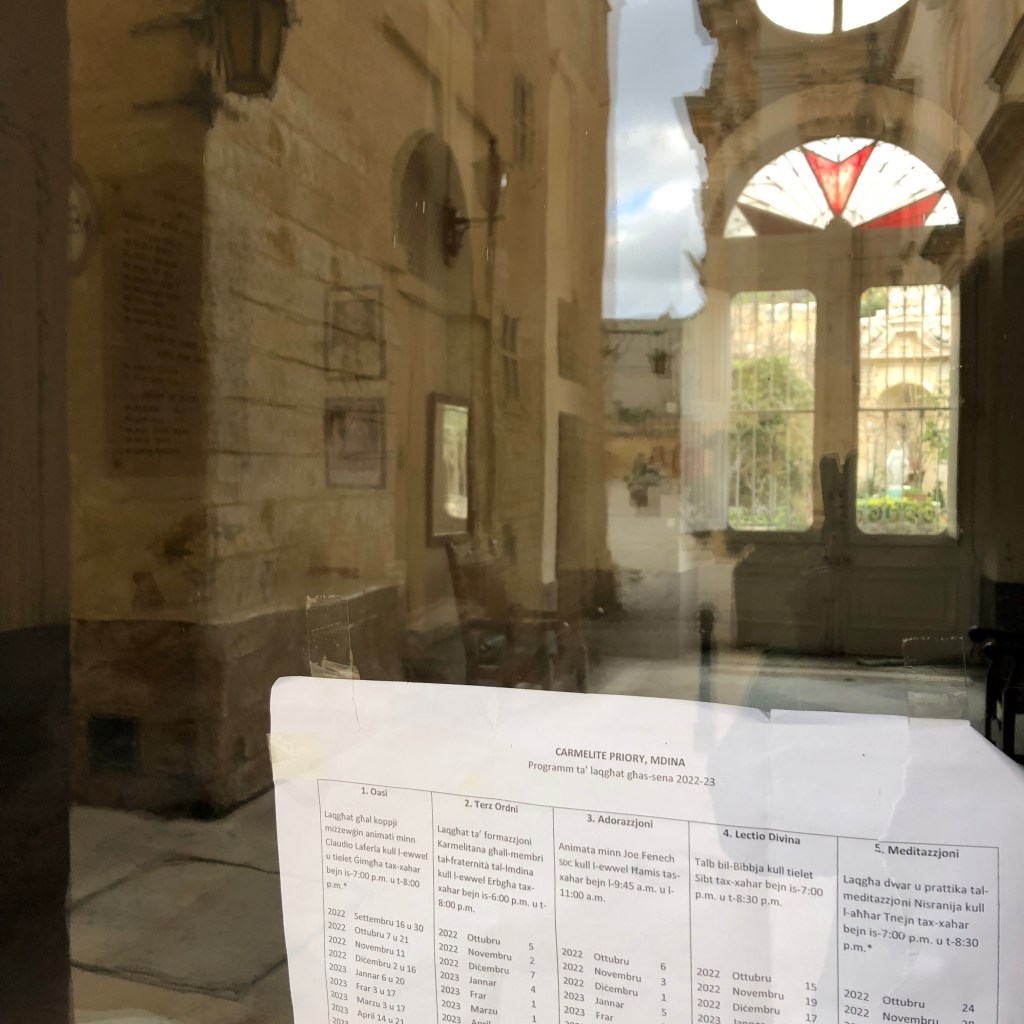
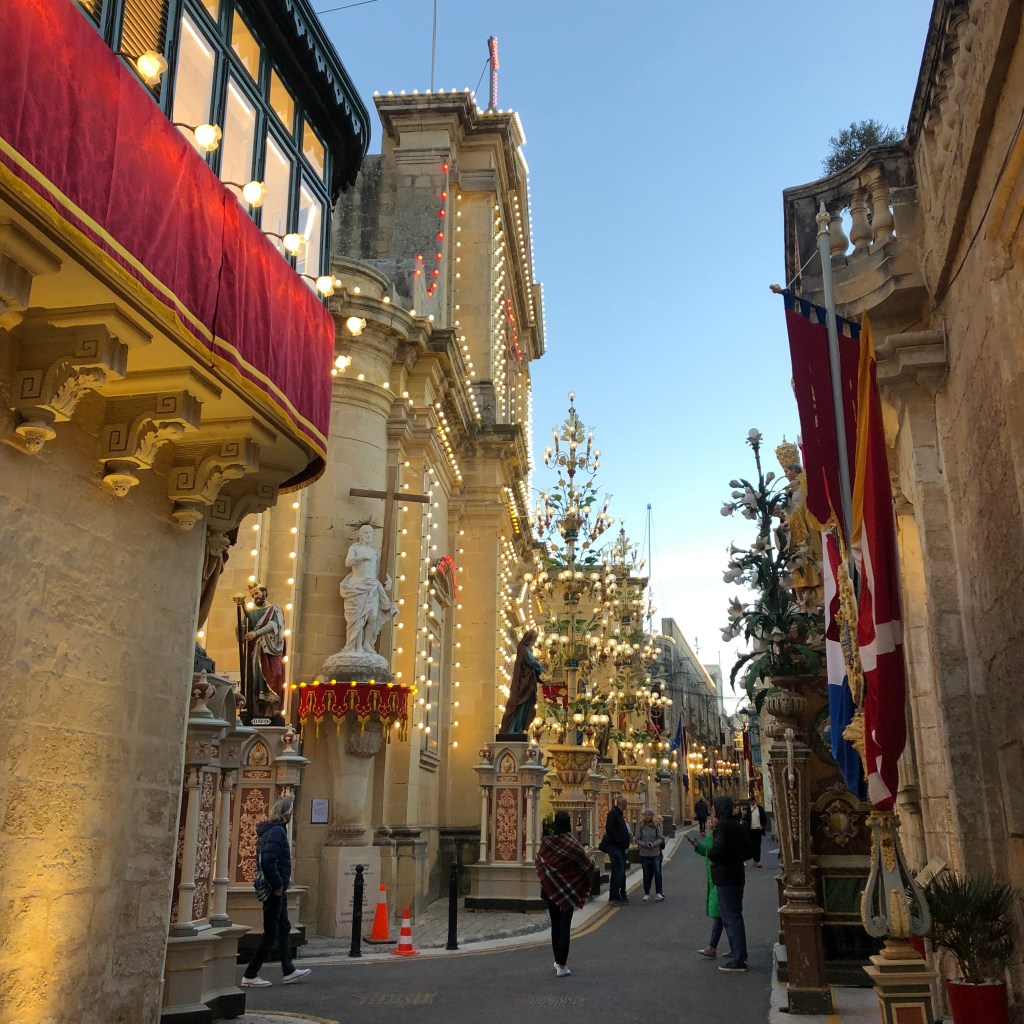
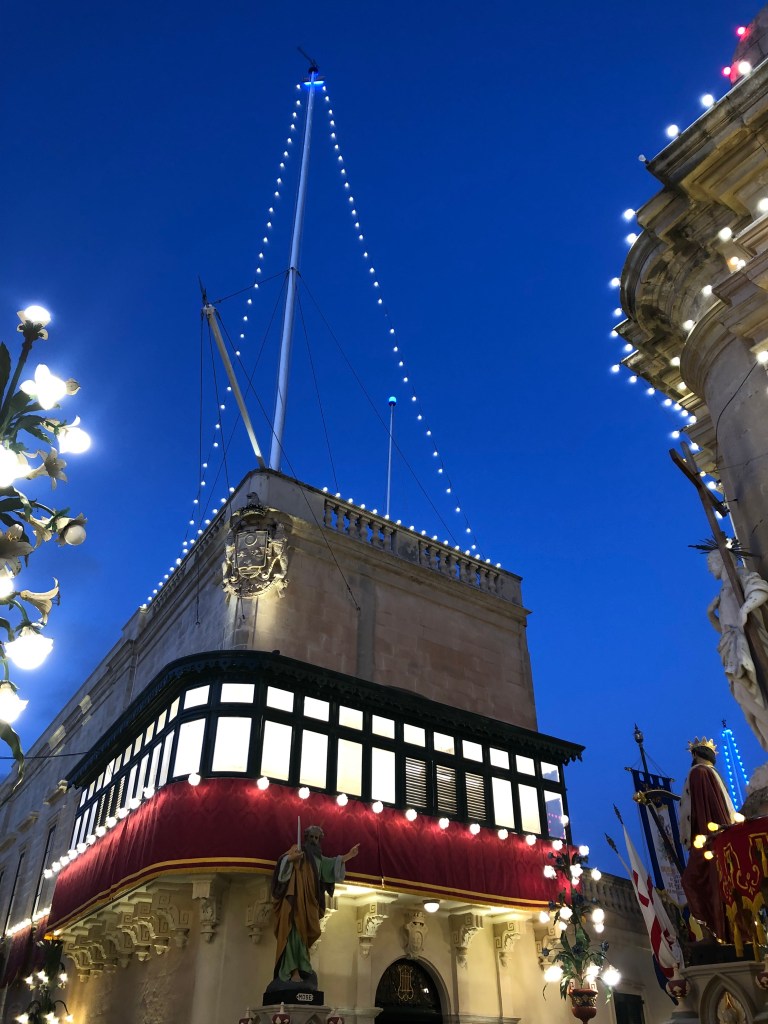
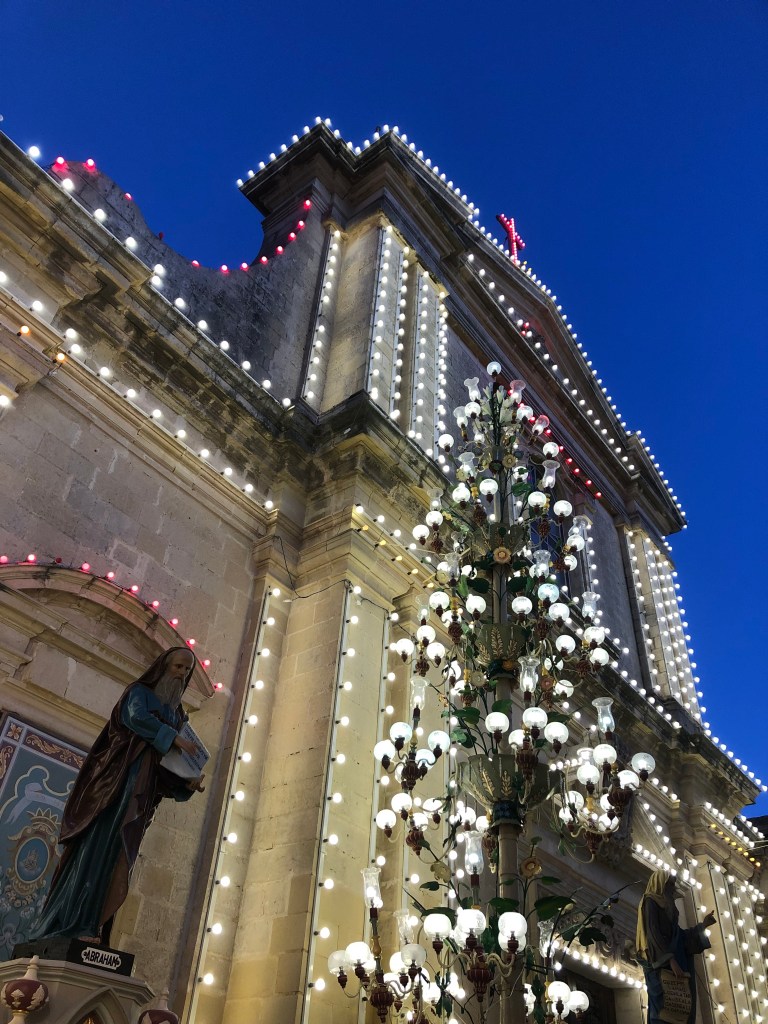
Nearby Rabat was also built on top of Melita, a Roman city. The one city was divided during an Arab conquest. The day I visited it, it was the Feast of Saint Joseph. The city was colorfully decorated and the churches were packed.




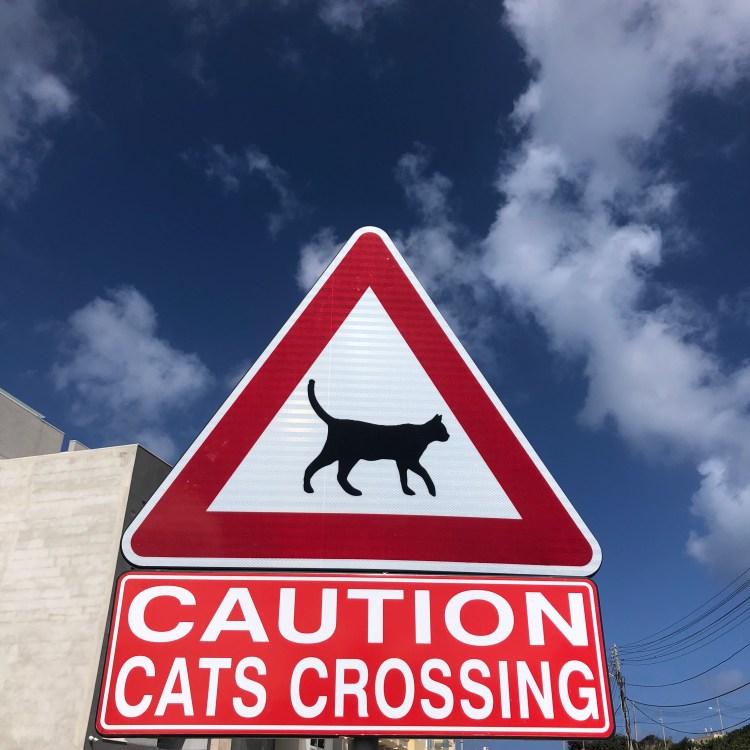
definitely more cats than flamingos

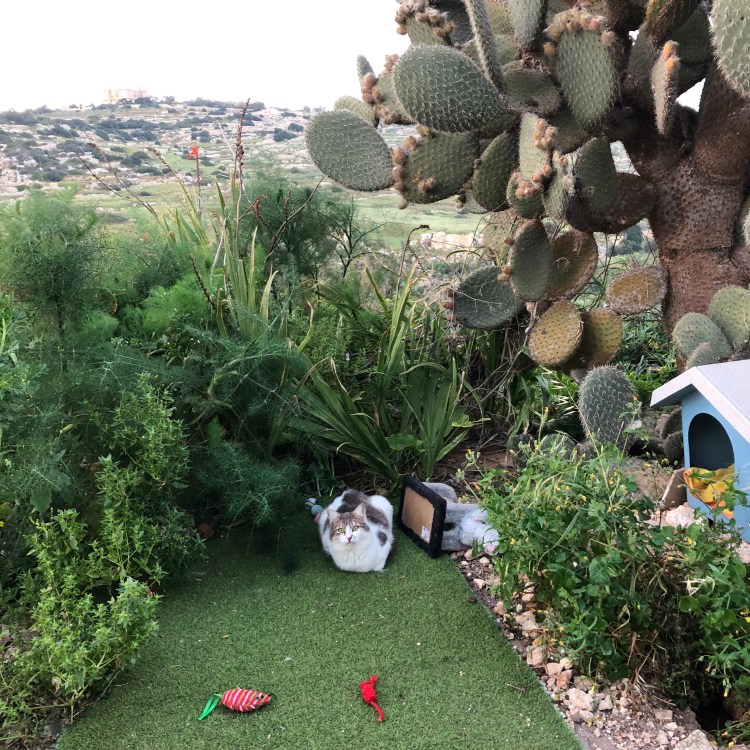
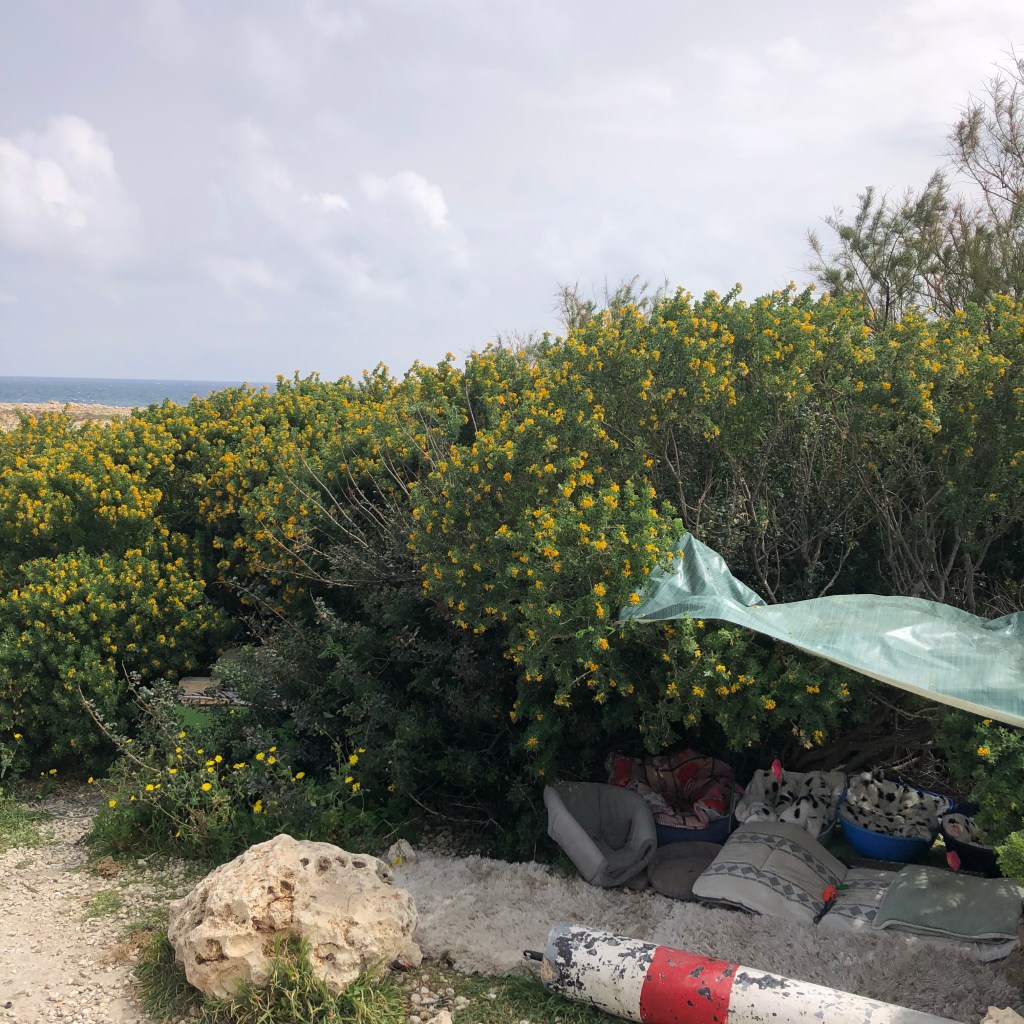


Cat in box among birds.
So many cats I got used to seeing a cat in the corner of my eye as a familiar possibility strolling down the street or having a nap. When I landed back and saw a dark long form sticking out of a street corner on ground level, I obviously first thought of a cat, which is unusual in the busy city I live in. It was a scooter.
boċċi




One fine evening, I went for another walk and discovered the surprising traditional game of boċċi. The players were having so much fun it gave contagious smiles.

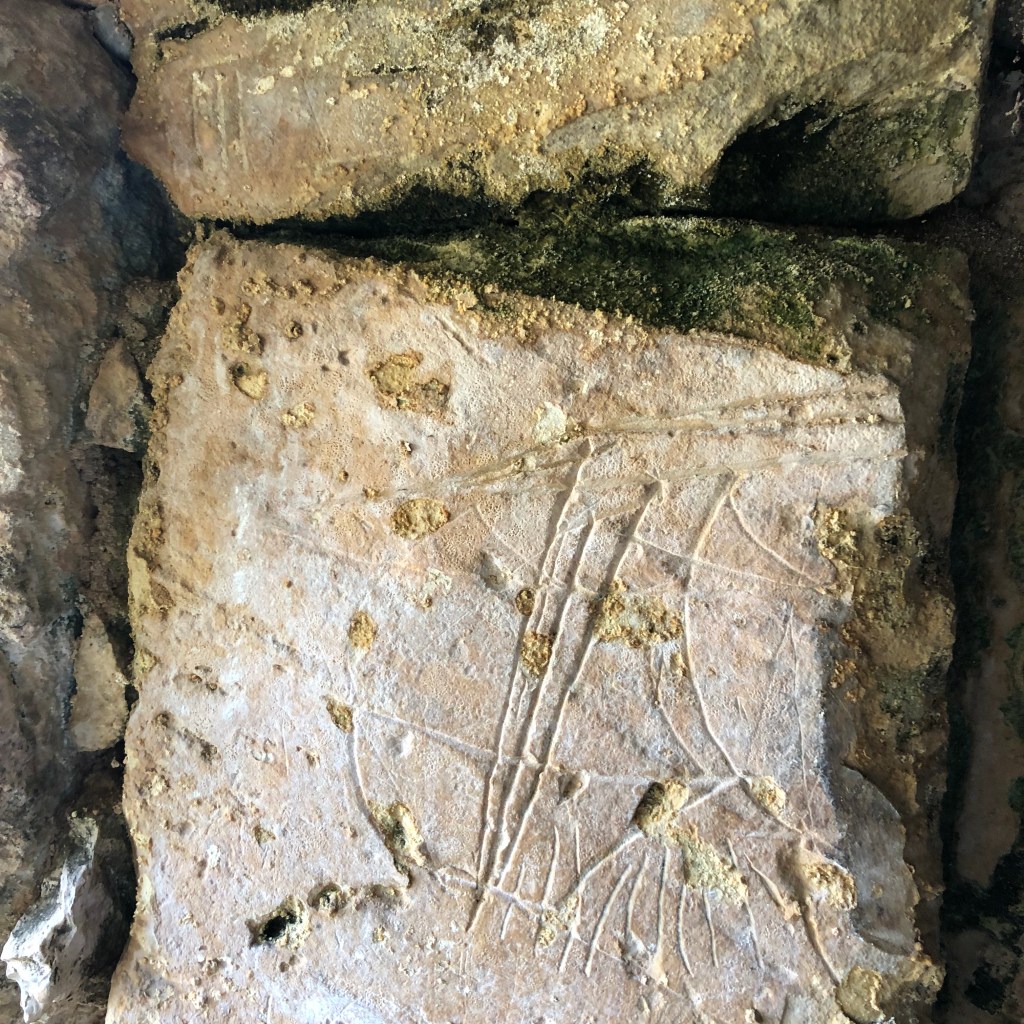


Finishing off this shared walk on a heart-warming archipelago with the most touching and humbling traces of humanity I saw there: graffiti of boats engraved on stone.
They can be found on walls, temples, churches and chapels. It has the same function as an Ex Voto painting donated to a church, honoring a specific saint that interceded during a hardship. When a sailor or a sea-traveler was saved from a storm, a shipwreck, pirates or the like, but couldn’t afford the thanksgiving of a painting, a humble image of the ship involved was etched on a stone.
Safe journeys!
 chameleonian times